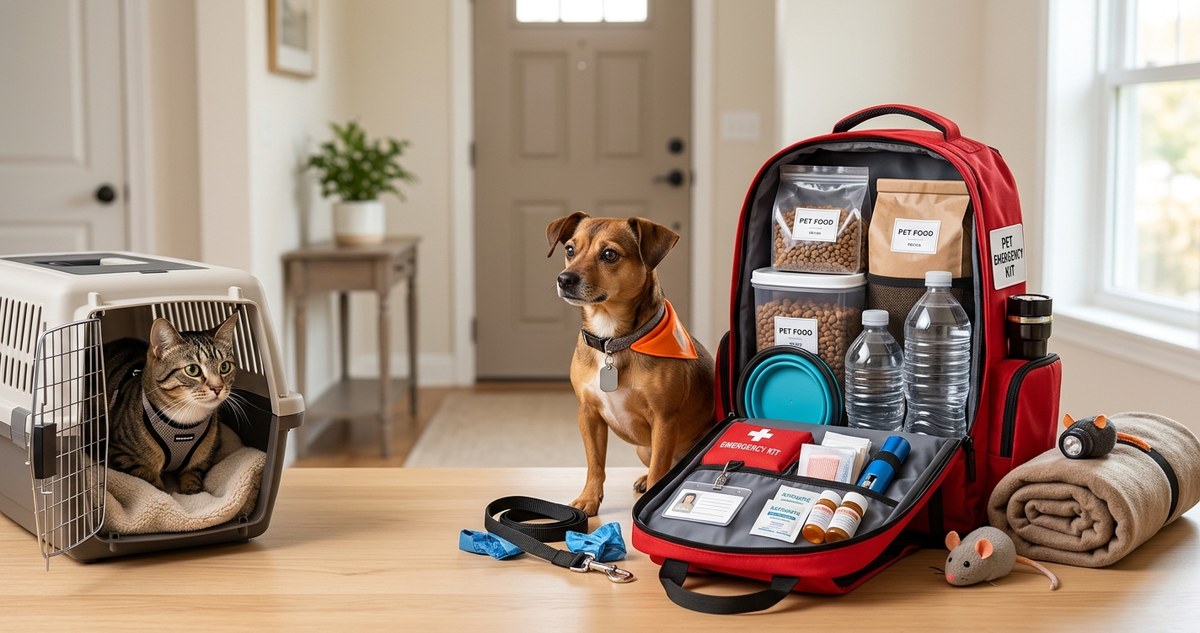
When a wildfire warning flashes on your phone or a hurricane watch shifts to a warning, your brain kicks into a different gear. You grab your wallet, your phone, your keys. But for millions of pet owners across the United States, the most urgent thought is, “Where is the carrier? Do I have enough food? What about the medication?” A well stocked pet emergency evacuation kit turns that panic into a simple grab and go motion. It is not about being paranoid. It is about being the person your pet depends on when things fall apart.
A pet emergency evacuation kit is a dedicated bag or bin packed with at least 72 hours of food, water, medications, comfort items, and critical documents for your animal. This guide walks you through building one in 2026, covering supplies for dogs, cats, birds, and small mammals. You will learn how to pack it, where to store it, and how to keep it current so you never have to leave a pet behind.
What Belongs in Your Pet Emergency Evacuation Kit
Think of this kit as a portable version of your pet’s life. It needs to sustain them for three to seven days away from home. The core categories are straightforward, but the details matter.
Food and Water Supplies
Pack at least a three day supply of your pet’s regular food. Do not switch brands during a disaster. A sudden diet change can cause vomiting or diarrhea, which is the last thing you need in a shelter or a car. Store the food in a sealed, waterproof container.
- Canned wet food with pop top lids (no can opener required)
- Dry kibble in a resealable bag or small bin
- Collapsible silicone bowls for food and water
- Bottled water: one gallon per pet per day
- A manual can opener if you bring canned food without pop tops
Medications and First Aid
If your pet takes daily medication, you need a two week supply if possible. Pharmacies may be closed or inaccessible for days.
- Heartworm and flea prevention doses
- Prescription medications in labeled bottles
- A basic pet first aid kit with antiseptic wipes, gauze, and vet wrap
- A copy of your pet’s vaccination records (especially rabies)
- A list of any allergies or chronic conditions
Comfort and Safety Gear
Stress affects animals just like it affects people. Familiar items can lower their anxiety.
- A sturdy leash, harness, and collar with ID tags
- A crate or carrier labeled with your contact info
- A favorite toy or a blanket that smells like home
- A muzzle (even a friendly dog may bite when scared)
- Absorbent pads or puppy pads for accidents
Critical Documents
Paperwork can be hard to replace after a disaster. Keep these in a waterproof pouch inside the kit.
- Proof of ownership or adoption records
- Microchip registration information
- Recent photos of your pet (printed, not just on your phone)
- Emergency contact list: your vet, a 24 hour animal hospital, and a friend outside your area
Step by Step: How to Assemble Your Kit
Building a kit does not have to cost a lot or take a full afternoon. Follow these steps and you will be ready before the next storm watch.
-
Choose your container. A plastic tote with a locking lid works well for cats and small animals. A duffel bag is better for dogs because it is easier to carry. Whatever you pick, keep it in a single, accessible spot.
-
Gather the food and water first. These are the heaviest items. Put them at the bottom of the bag. Rotate the food every six months to keep it fresh. Write the expiration date on the bag with a marker.
-
Add the medical supplies. Place medications in a small zippered pouch. Tape a note inside the pouch with your vet’s phone number and the dosage instructions.
-
Load the comfort items. Put the leash and collar near the top so you can grab them before opening the crate. Tuck the blanket or toy in last so it stays clean.
-
Slide the documents into a waterproof sleeve. Tape a spare set of keys to the outside of the bag. You may need to borrow a car or access a storage unit.
-
Test the kit. Lift the bag. Can you carry it in one hand while holding a carrier in the other? If not, split the supplies into two smaller bags.
Common Mistakes Pet Owners Make
Even people with good intentions often miss these details. A small oversight can become a big problem during an actual evacuation.
| Mistake | Why It Hurts | The Fix |
|---|---|---|
| Using a bag that is too heavy | You cannot carry it and manage your pet | Split into two bags or use a rolling duffel |
| Forgetting a carrier for cats | Cats hide under furniture when scared | Keep the carrier out and ready at all times |
| Packing expired food or meds | Supplies are useless when needed most | Set a calendar reminder to check every six months |
| Skipping water for the pet | Shelters may not provide pet water | Store one gallon per pet per day |
| No plan for small animals | Birds and hamsters need special care | Include a travel cage and heat source |
| Relying on your phone for documents | Dead battery means no access to records | Keep printed copies in the waterproof pouch |
“During a mandatory evacuation, the single biggest regret we hear from pet owners is, ‘I thought I had more time.’ A kit that is already packed and sitting by the door removes that regret entirely.” Dr. Sarah Kline, DVM, FEMA Animal Response Team
Special Considerations for Different Pets
Not every pet fits the same mold. A cat needs different supplies than a parrot or a guinea pig. Here is how to adjust your kit.
Dogs
Dogs are usually the easiest to evacuate because they travel well. Still, pack an extra leash. A standard leash can break under stress. Bring a copy of their rabies certificate. Many emergency shelters require proof of vaccination.
Cats
Cats are masters of hiding. A stressed cat can wedge itself behind a refrigerator or inside a box spring. Keep the carrier out of the closet and in a room where the cat spends time. Put a familiar towel inside the carrier. Spray a synthetic calming pheromone on the towel the night before.
Birds
Birds are sensitive to temperature and stress. Their kit should include a small travel cage, a cover to block drafts, and a heat pack. Pack their specific seed mix in a sealed container. Birds can go into shock from loud noises, so cover the cage during transport.
Small Mammals (Rabbits, Guinea Pigs, Hamsters)
These animals need a secure carrier with ventilation. Pack their regular hay or pellets. Include a small water bottle that attaches to the cage. A blanket over the carrier helps them feel safe. Never use cedar or pine shavings in a travel setup; they can cause respiratory issues.
Keeping Your Kit Fresh and Ready
A kit that sits untouched for two years is not a kit. It is a collection of expired supplies. Make a habit of refreshing it on the same day you change your smoke detector batteries.
- Twice a year: check food expiration dates, test the flashlight, replace batteries
- Once a year: update your pet’s photo, review microchip info, swap out seasonal items like a winter coat or summer cooling mat
- After any change: if you move, adopt a new pet, or change vets, update the documents immediately
If you are looking for more ways to support animals beyond your own household, consider how to get started as a volunteer for local animal shelters. Many shelters need help with emergency preparedness training for the community.
What to Do When the Evacuation Order Comes
Having a kit is only half the battle. You also need a plan for the moment the order is given.
-
Grab the kit and your pet. Do not wait to see if the threat passes. Early evacuation is safer and less stressful for everyone.
-
Put the collar and leash on your dog before you open the door. A scared dog can slip out of a loose collar.
-
Place cats in their carrier before you load the car. Do not try to carry a cat in your arms. They will bolt.
-
Check your emergency contact list. Call ahead to confirm that your destination accepts pets. Not all hotels or shelters do.
-
Leave a note on your door. If you are forced to leave a pet behind (only as a last resort), write the number and type of animals inside and where they are located. This helps rescue teams find them faster.
Your Next Step Toward Preparedness
You do not need to buy everything at once. Start with the bag, the food, and the water. Add the documents and medications next. Finish with the comfort items. Once it is done, you will feel a weight lift. You will know that no matter what the weather brings, your pet has a fighting chance.
Building a pet emergency evacuation kit is one of the most practical acts of love you can offer your animal. It says, “I thought about you. I prepared for you. I will not leave you behind.” That kind of care extends beyond your own home. You can also support animal rescue missions in your community by donating extra supplies or sharing this guide with a neighbor who has pets. Preparedness is a skill we can all learn, and it starts with a single bag by the door.