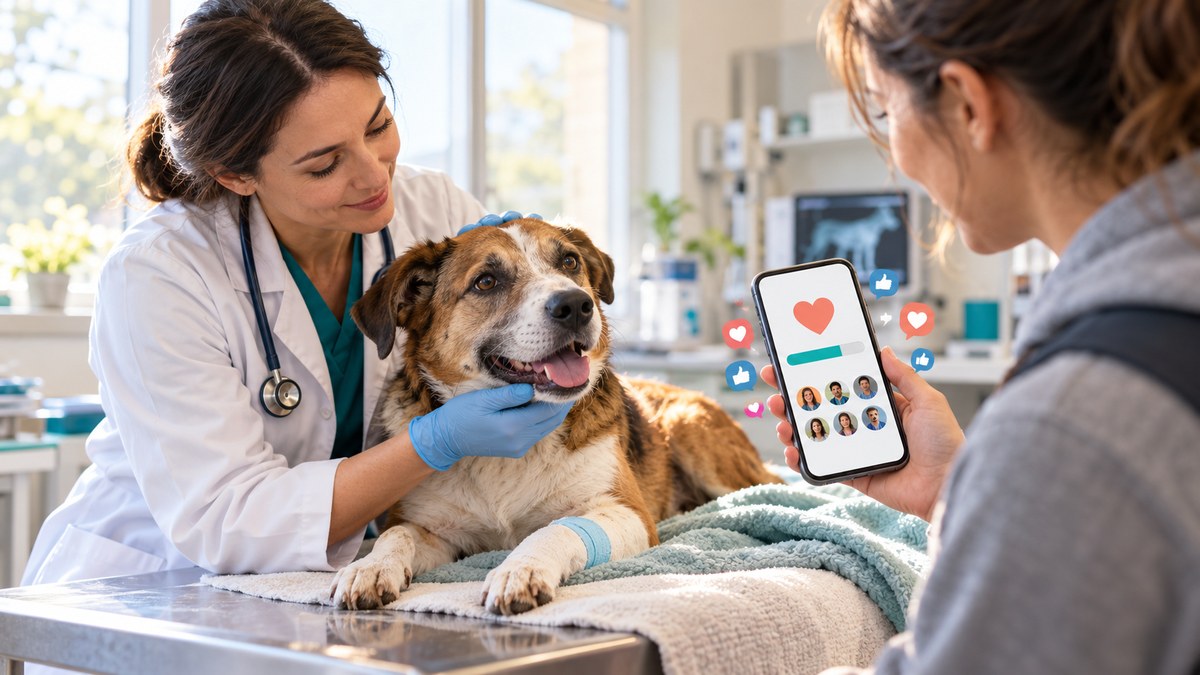
You open your phone and see a picture that stops you cold. A rescue you pulled from a kill pen three weeks ago is now limp, barely breathing, with a distended belly that screams bloat or torsion. The vet says the estimate is $4,200. You have $180 in the rescue account. Your heart sinks because you know exactly what comes next: a frantic post, a prayer that the algorithm is kind, and the crushing weight of wondering if your community will show up.
That moment is brutal. But it does not have to be hopeless.
If you run a small rescue or operate as a solo rescuer, you already know that emergency vet bills are the single biggest threat to your work. Fundraising for these moments is not just about asking for money. It is about having a system in place before the crisis hits. Your social media following is the most powerful tool you own for that system. When used correctly, it can turn a desperate scramble into a funded surgery.
Emergency vet care for rescues is expensive and unpredictable. Your social media following can bridge that gap, but only if you have a pre-built strategy. This guide walks you through a repeatable system: preparing your audience, structuring your ask, choosing the right platform, and avoiding common mistakes that kill trust. You can fund a $5,000 surgery in under 48 hours without burning out.
Why Your Existing Followers Are Your Best Asset
Many rescue founders believe they need a massive following to raise money. That is not true. A deeply engaged group of 500 people will fund an emergency faster than a passive audience of 10,000. Your existing followers already trust you. They have watched you pull an animal from a ditch, bottle feed a neonate through the night, and cry over a loss. That trust is currency.
When you post about an emergency, your followers do not just see a request for cash. They see a story they are already part of. They saw the rescue video two weeks ago. They know this animal. They feel responsible for its survival. That emotional investment is what turns a scroll into a donation.
The goal is to convert that passive goodwill into an active, organized funding machine. You do that by preparing your audience before the emergency ever happens.
How to Prepare Your Social Media Audience for Emergency Funding
You cannot build a plane while it is falling out of the sky. The same logic applies to fundraising. If you wait until the vet hands you the estimate, you are starting from zero. Instead, lay the groundwork now.
-
Establish a dedicated emergency fund narrative. Talk openly about your rescue’s emergency vet fund as a permanent part of your work. Call it something specific like “The Bailey Fund” or “Critical Care Pool.” Post about it when there is no emergency. Explain that this fund covers the gap between life and death for animals who arrive broken. When people know the fund exists, they feel like insiders. They want to keep it full.
-
Show your vet bills. This sounds counterintuitive, but it works. Post a redacted screenshot of a past emergency bill. Show the total. Show what you paid and what was donated. Transparency builds credibility. Your followers will see that money goes directly to the vet, not to your coffee habit.
-
Create a “pledge” system. Ask followers to pledge a small amount, like $5 or $10, that they agree to send within 24 hours if you post an emergency alert. You can use a simple Google Form or a pinned comment thread. This pre-commits people. When the crisis hits, you are not asking strangers. You are calling in pledges from people who already said yes.
-
Share the “why” behind the cost. Emergency vet care is expensive because it requires after-hours fees, specialist surgeons, and expensive medications. Explain that a $3,000 bill often covers surgery, bloodwork, IV fluids, and three days of hospitalization. Do not let your audience think you are being overcharged. Educate them so they understand the value.
-
Build a weekly “fund friday” habit. Every Friday, post a simple update on the emergency fund balance. Use a graphic that shows a thermometer or a jar filling up. Even if the number is small, consistency trains your audience to check in. When the balance drops, they notice. When it rises, they celebrate with you.
The 5-Step Emergency Fundraising Process (When Crisis Hits)
The moment you get that vet estimate, your brain will go into survival mode. Having a written process means you do not have to think. You just execute.
-
Step one: Assess and document immediately. Take a clear video of the animal. Show the breathing, the wound, the lethargy. Get a photo of the vet estimate. You need visual proof. Do not post a text-only plea. People donate to faces, not descriptions.
-
Step two: Post the raw truth. Write a caption that states the exact amount needed, the deadline (vet will not hold a spot past 6 PM tomorrow), and the direct link to donate. Use a platform like PayPal, Venmo, or a dedicated GoFundMe. Keep the language honest and urgent. Do not sugarcoat. Say “This dog will die without surgery tonight.”
-
Step three: Activate your inner circle. Before you post publicly, send the link to your five most reliable supporters. Ask them to donate first and then share immediately. Social proof matters. When others see that donations are already coming in, they feel safer contributing.
-
Step four: Update relentlessly. Every two hours, post a progress update. “We are at $1,200 of $4,200. 12 hours left.” Use a graphic that shows the gap closing. Tag the animal by name. Thank donors publicly (with their permission). This creates a sense of momentum and community ownership.
-
Step five: Close the loop. Once the goal is met, post a final update. Show the animal at the vet. Show the receipt. Then, two days later, post a recovery video. This step is critical. It proves that the money was used correctly and that the animal survived. It also primes your audience to donate again in the future.
“The single biggest mistake I see rescue founders make is disappearing after the money is raised. You have to close the loop. When people see the animal recovering, they feel like heroes. That feeling is what makes them donate next time.” — Sarah K., founder of a rural Georgia rescue with 3,200 Instagram followers.
What to Avoid: Common Fundraising Mistakes
Some well-intentioned posts actually hurt your chances. Here is a breakdown of what works and what backfires.
| Technique or Mistake | Why It Happens | Impact on Fundraising | Better Approach |
|---|---|---|---|
| Posting only text without photos or video | Rescuer is in a panic and types quickly | Low engagement, low trust, low donations | Always take 30 seconds to film a 15-second video |
| Asking for “anything helps” without a specific goal | Fear of sounding demanding | Donors give small amounts or skip | State the exact dollar amount and what it covers |
| Not updating the post after the goal is met | Rescuer is exhausted and moves on | Donors feel ignored and less likely to give again | Post a thank-you and recovery update within 48 hours |
| Using only one platform (Facebook only) | Habit or lack of knowledge | Misses younger donors on Instagram or TikTok | Cross-post to your top two platforms |
| Sharing the vet bill after the money is raised | Fear of being judged | Builds trust and shows accountability | Share the bill upfront or immediately after |
Choosing the Right Platform for Your Rescue
Not every social media platform works the same way for emergency funding. Here is how to match your strategy to the platform.
-
Facebook is still the king of community fundraising for local rescues. Your audience tends to be older, more established, and more likely to share within neighborhood groups. Facebook fundraisers also allow direct donations without leaving the app. Use Facebook for detailed updates, longer stories, and tagging local community pages.
-
Instagram is visual and fast. It works best for before-and-after photos, short video reels of the animal in distress, and Stories with donation stickers. The downside is that links are harder to use. You need to direct people to your bio link or use the “Add Yours” sticker for engagement. Instagram is great for reaching younger donors who want to feel emotionally connected.
-
TikTok is the wild card. If you can film a compelling 30-second video of the animal’s story, TikTok’s algorithm can push it to thousands of people outside your following. The key is to use rescue-related hashtags and post at peak hours (evening and weekends). TikTok is excellent for viral surges, but unreliable for steady funding.
-
Nextdoor and local Facebook groups are underused goldmines. Your neighbors care about animals in their own community. A post in a local “Lost and Found Pets” group or a “Buy Nothing” group can bring in donations from people who would never find your rescue page. Always cross-post to local groups when you have an emergency.
Building a Sustainable System Beyond the Crisis
Emergency funding is reactive. But you can build a proactive system that reduces how often you need to scramble.
Start a monthly donor program. Even if you only get 20 people pledging $10 a month, that is $200 of predictable income. Use that money to build a dedicated emergency savings account. When the next crisis hits, you already have a cushion. You only need to fundraise the gap.
You can also set up a small online store. Sell t-shirts, stickers, or digital downloads like pet portrait commissions. The profit from these sales can be earmarked directly for the vet fund. It gives your followers a way to contribute that feels like a transaction, not a handout.
Consider partnering with a local vet clinic that offers a rescue discount. Many clinics will reduce their emergency fee by 10 to 20 percent for registered 501(c)(3) rescues. That discount can mean the difference between a fully funded surgery and a heartbreaking euthanasia.
If you are looking for more ways to expand your impact without burning out, check out top 10 simple ways to support animal rescue efforts from home. These ideas can help you engage your audience even when there is no emergency.
Your Social Media Following Is a Lifeline
You did not start your rescue because you were good at asking for money. You started it because you could not look away from suffering. But the animals in your care need you to be good at this. They need you to master the skill of turning a scroll into a donation.
Your social media following is not just a number. It is a room full of people who care about the same things you care about. They want to help. They just need you to show them how. When you give them a clear path, a transparent process, and a heartfelt story, they will show up every single time.
The next time you get that 2 AM phone call from the emergency vet, you will not panic. You will open your phone, take a deep breath, and follow the system. You will post the video, state the number, and watch your community do what it does best. And that animal will get its surgery.
Now go set up that emergency fund page. Your next rescue is counting on you.