Your commute is probably the most predictable part of your day. You know every pothole, every traffic light, and every place where the highway slows to a crawl. But here is the thing you might not see: the animals. The stray dog curled up against a guardrail. The turtle trying to cross a four-lane road. The opossum frozen in your headlights. For an eco-conscious driver, that moment feels like a test. Do you keep going, or do you stop? In 2026, more drivers than ever are choosing to stop. And with the right knowledge, you can turn your daily drive into a routine that saves lives without putting anyone in danger.
Saving roadside animals starts before you even leave your driveway. By scanning the road ahead, keeping a rescue kit in your trunk, and knowing exactly how to approach different species, you can help without risking your safety or the animal’s. This guide gives you a repeatable system for spotting animals, assessing the scene, and performing a safe rescue on any type of road.
The Quiet Crisis Happening on Your Route
Every year in the United States, millions of animals are struck by vehicles. The numbers are staggering. According to the Federal Highway Administration, there are between one and two million collisions with large animals like deer each year. That count does not include the countless cats, dogs, rabbits, turtles, and birds that are hit but never reported. For suburban drivers who travel through rural corridors or even busy city outskirts, the odds of encountering a roadside animal in distress are high.
The good news is that most of these encounters are preventable. Not every animal on the shoulder is doomed. With a little awareness and a calm approach, you can be the difference between a tragic outcome and a second chance.
What You Need in Your Car Before You Spot an Animal
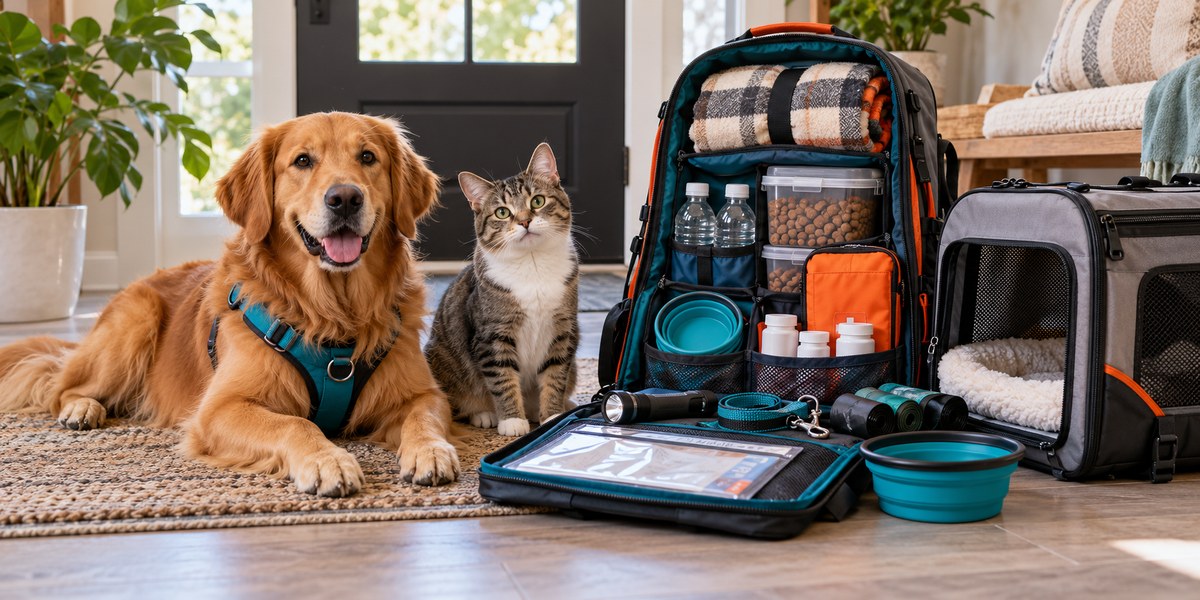
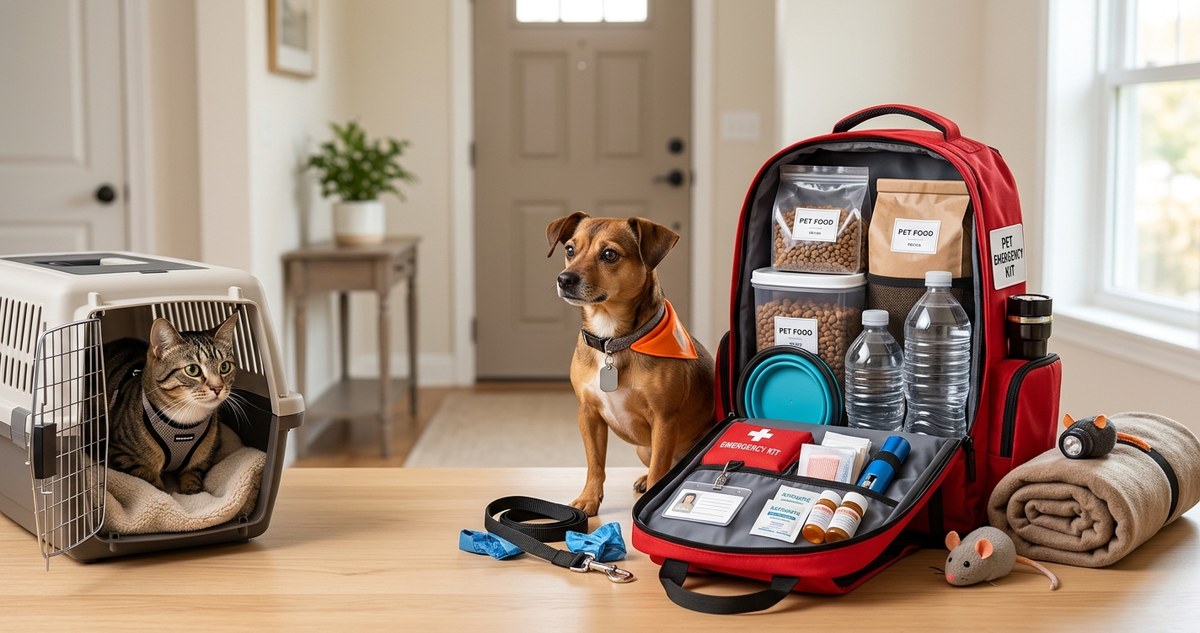
You cannot help effectively if you are not prepared. Think of your car as a mobile rescue station. You do not need a lot of expensive gear. You just need a few key items that stay in your trunk year-round.
- A reflective safety vest to keep you visible to other drivers.
- A pair of heavy work gloves to protect your hands from bites and scratches.
- A blanket or large towel for wrapping injured animals or providing warmth.
- A cardboard box with air holes for transporting small animals.
- A collapsible water bowl and a bottle of fresh water.
- A pet carrier or crate for larger animals like stray dogs or cats.
- A basic first aid kit that includes gauze, bandages, and antiseptic wipes.
- A flashlight or headlamp for low-light rescues.
Keep these items in a single bag or bin so you can grab them fast. You do not want to be digging through your trunk while a scared animal is trying to dodge traffic.
How to Spot Roadside Animals Before It Is Too Late
Your eyes are your most important tool. Train yourself to scan the edges of the road, not just the pavement in front of you. Animals rarely appear in the middle of your lane. They come from the shoulders, the medians, and the tree lines.
Look for these signs:
- Eyes reflecting light at night or in low light.
- Movement in tall grass or along fence lines.
- A sudden shadow or shape near a guardrail.
- Other cars slowing down or swerving for no obvious reason.
- Carcasses on the road. Live animals often stay near deceased companions.
The best time to spot animals is during dawn and dusk. That is when deer, raccoons, opossums, and stray cats are most active. In 2026, many newer cars come with night vision or animal detection systems, but you should never rely on technology alone. Your own awareness is still the most reliable tool.
A Step-by-Step Process for a Safe Roadside Rescue
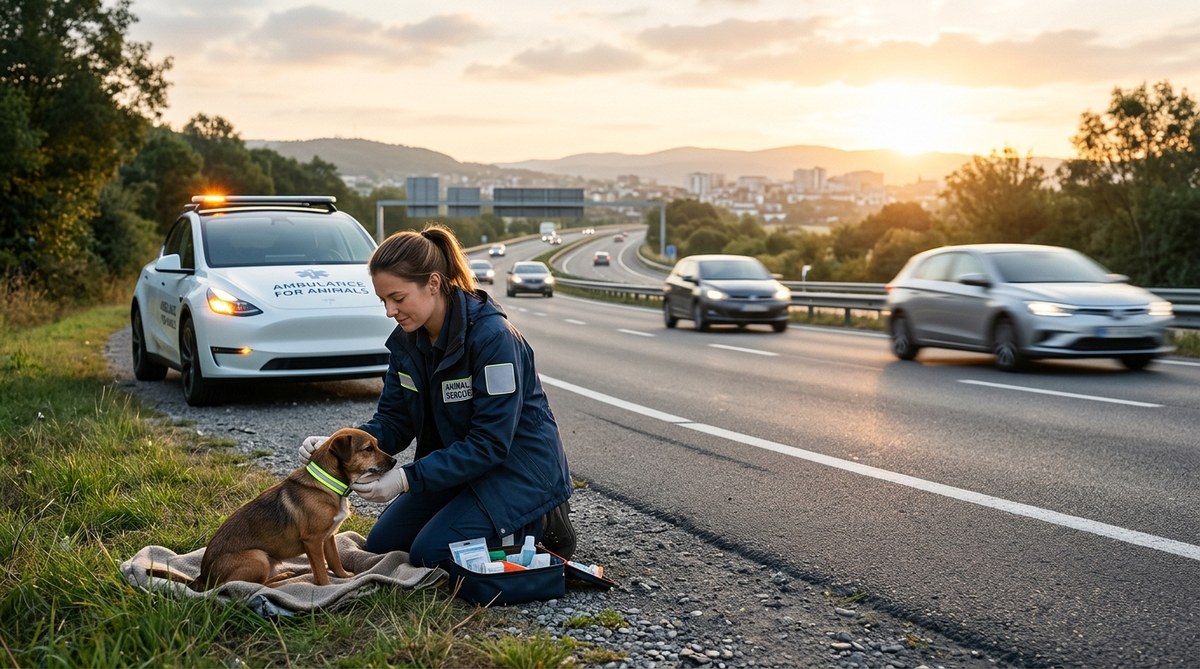
When you see an animal in trouble, your instinct might be to jump out immediately. Do not do that. Follow this numbered process to keep everyone safe.
-
Assess the traffic. Check your mirrors and blind spots. If you are on a highway, wait for a gap. If the road is busy, put on your hazard lights and slow down gradually. Never slam on your brakes.
-
Pull over safely. Find a spot as far from moving traffic as possible. If the animal is on a busy road, it may be safer to call for help than to attempt a rescue yourself. You can call your local animal control or a wildlife rehabilitation center.
-
Turn on your hazard lights. This alerts other drivers that something unusual is happening. If you have roadside flares or reflective triangles, set them up behind your car.
-
Approach the animal slowly. Talk in a calm, low voice. Do not make direct eye contact, which can be seen as a threat. If the animal is a dog or cat, let it sniff your hand before you try to touch it.
-
Use your gear. Put on your gloves. If the animal is small enough, use the towel or blanket to gently scoop it up. For larger animals like stray dogs, try to coax them into a carrier with food or a calm voice.
-
Check for injuries. If the animal is bleeding or has a visible wound, wrap it in a towel and get it to a vet or rescue center as soon as possible. Do not try to treat serious injuries yourself.
-
Transport safely. Place the animal in a secure box or carrier. Keep the car quiet and at a moderate temperature. Do not play loud music or make sudden movements.
-
Deliver to a professional. Take the animal to the nearest animal shelter, veterinary clinic, or wildlife rehabilitation center. Call ahead so they know you are coming.
Species-Specific Tips for Common Roadside Animals
Different animals need different approaches. A turtle is not a stray cat. A bird is not a deer. Here is a table to help you understand the best way to handle the most common roadside animals you will encounter.
| Animal Type | Common Scenario | Safe Approach | Key Mistake to Avoid |
|---|---|---|---|
| Stray dog or cat | Sitting on shoulder or median | Use food to lure; approach slowly from the side | Chasing the animal into traffic |
| Turtle or tortoise | Crossing the road | Carry it in the direction it was heading | Putting it back where it came from |
| Bird (small) | On the ground, unable to fly | Gently scoop with a towel | Assuming it is injured when it is just a fledgling |
| Opossum or raccoon | Near road at night | Wear thick gloves; use a blanket | Trying to grab the tail or scruff |
| Deer | Standing frozen in headlights | Honk short bursts to encourage it to move | Getting out of the car to shoo it |
| Squirrel or rabbit | Dashing across the road | Slow down and wait; do not swerve | Swerving into another lane or off the road |
“The most important rule in roadside rescue is to never put yourself in danger. A dead rescuer cannot save any animals. If the situation feels unsafe, call a professional.” — Dr. Sarah K. Evans, wildlife veterinarian and author of Roadside Compassion.
Common Mistakes That Put Everyone at Risk
Even well-meaning rescuers can make errors. Here are the most common ones to watch for.
- Swerving suddenly. You might miss the animal and hit a tree, another car, or a pedestrian. Always brake, do not swerve.
- Assuming the animal is friendly. A scared animal will bite or scratch. Always use gloves and a barrier.
- Forgetting to call for backup. Some rescues are too dangerous for a single person. Do not hesitate to call animal control or 911 if the animal is in the middle of a highway.
- Leaving the animal on the side of the road. Even if you cannot catch it, you can at least alert local authorities. A loose animal on a road is a hazard for everyone.
- Taking the animal home without a plan. Unless you are a licensed wildlife rehabilitator, you cannot provide the proper care. Always transport to a professional facility.
How to Turn Your Commute Into a Lifesaving Routine
You do not have to go out of your way to make a difference. You just need to build a few habits into your existing drive.
Start by setting a mental intention at the beginning of each trip. Tell yourself, “Today, I am watching for animals.” That simple shift in focus changes how you scan the road.
Next, keep your rescue kit in the passenger seat or the trunk. If you see an animal, you will not waste time searching for supplies.
Finally, learn the contact information for your local animal control and wildlife rehab centers. Save them in your phone. When you are on the side of the road, you do not want to be Googling numbers.
You can also share your experiences with others. Talk to your neighbors about the animals you have helped. Post about it on social media to raise awareness. Every story you tell encourages someone else to stop and help.
If you want to go further, consider volunteering with a local rescue group. Many organizations have roadside rescue training programs. You can learn more about how to get started as a volunteer for local animal shelters and build skills that will make you even more effective on the road.
Your First Rescue Starts Tomorrow Morning
You do not need a special title or a uniform to be a roadside rescuer. You just need a car, a little preparation, and the willingness to stop. The next time you see a shape on the shoulder, you will know exactly what to do. You will check your mirrors, pull over safely, grab your gloves, and assess the situation. You will be calm, capable, and compassionate. That is the kind of driver the world needs more of in 2026.
Your commute is no longer just a way to get from point A to point B. It is a mission route. Every mile you drive is an opportunity to save a life. Take that opportunity seriously, and you will find that the animals you help are not the only ones who benefit. You will feel a deeper connection to the world around you, and that feeling is worth more than any destination.
Now, go ahead and put that rescue kit together. Your first rescue could be waiting for you around the next bend.