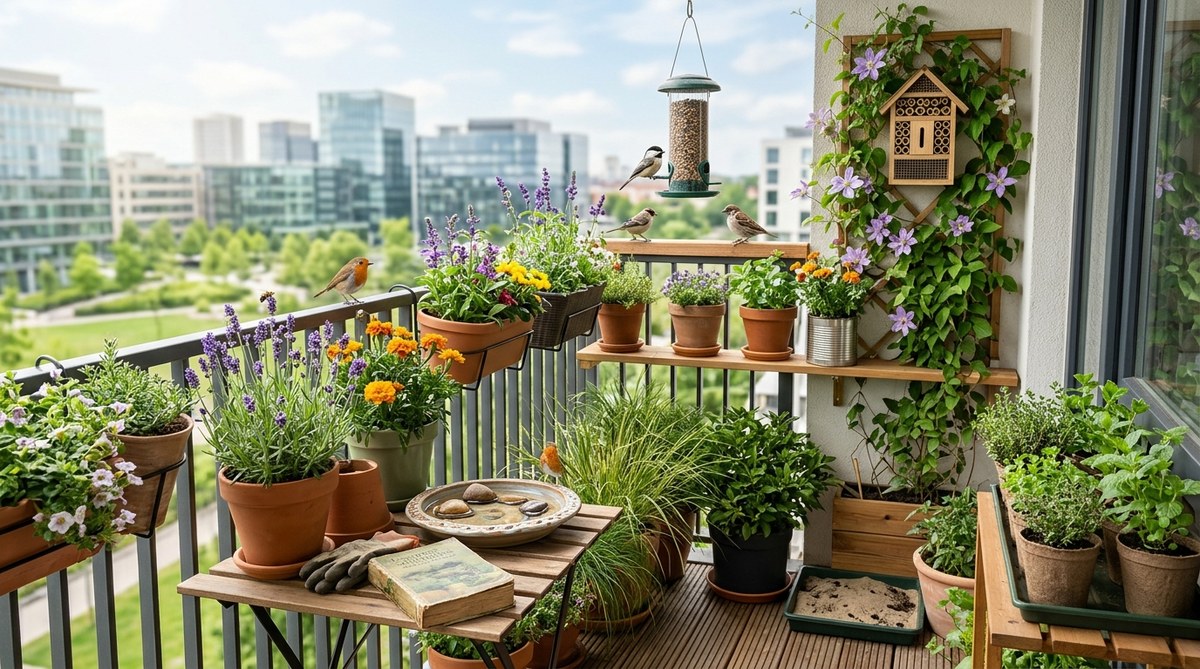
Your apartment balcony might be small. It might be high up. It might even be just a narrow strip of concrete. But to a hungry bee or a tired migrating bird, that tiny space can look like an oasis. Across the United States, urban wildlife is losing habitat at an alarming rate. Parking lots and glass towers replace the meadows and thickets where pollinators used to find food. You cannot build a forest on your balcony. But you can create a pit stop. You can offer a sip of water, a safe perch, or a single pot of nectar-rich flowers. And the best part? You do not need a big budget to do it. Here are seven affordable, practical ways to turn your apartment into a wildlife-friendly space in 2026.
A wildlife-friendly balcony does not require a big backyard or a fat wallet. By choosing native plants in simple pots, adding a shallow water source, and leaving a small pile of twigs for shelter, you can attract birds, bees, and butterflies even on a high-rise apartment. Start with just one change today. Your small space matters more than you think.
Start with Native Plants in Containers
The single most effective change you can make is to add plants that evolved in your region. Native plants are already adapted to your local climate and soil. They also provide the specific nectar and leaves that local insects need to survive. A butterfly in Chicago cannot eat from a tropical hibiscus. It needs milkweed or purple coneflower.
You do not need a garden bed. A few medium-sized pots or a long window box will work. Look for species like butterfly weed, black-eyed Susan, or bee balm. These plants are tough, beautiful, and cheap at local nurseries. In 2026, many garden centers even label plants that are “pollinator friendly” to make shopping easier.
What to plant for your region:
- Northeast: Aster, goldenrod, wild bergamot.
- Southeast: Blanket flower, coreopsis, scarlet sage.
- Midwest: Purple coneflower, leadplant, prairie dropseed.
- West: California poppy, lupine, manzanita.
Give Them a Drink with a DIY Water Source
Water is harder for urban wildlife to find than food. Birds need to bathe. Bees need a safe place to land and drink without drowning. A simple shallow dish can solve both problems.
Find a saucer from a large flower pot. Fill it with a layer of small pebbles or marbles. Add water until it reaches just below the top of the pebbles. Place it on your balcony railing or a small table. The pebbles give insects a place to stand while they drink. Birds will use the dish to bathe and preen.
A few tips for success:
- Change the water every two days to stop mosquitoes from breeding.
- Put the dish in partial shade so the water does not get too hot.
- Add a small stick that sticks out of the water as an extra perch.
This setup costs almost nothing. You probably already have a saucer and some pebbles at home.
Build a Simple Shelter from Scraps
Wild animals need places to hide from predators and bad weather. On a bare balcony, there are no bushes or hollow logs. You can build a tiny shelter with items you might otherwise throw away.
Gather a few small branches or twigs from a park. Bundle them loosely and place them in a corner of your balcony behind a pot. This creates a small “brush pile” where insects and small birds can take cover. If you have an old clay pot, turn it on its side and half-bury it in soil. That makes a perfect cool, dark cave for a toad or a beetle.
Do not use treated wood or pressure-treated lumber. The chemicals can harm the animals you are trying to help. Stick to natural, untreated materials.
Avoid Common Mistakes That Harm Wildlife
It is easy to make a well-meaning mistake. Some common balcony decorations actually hurt the animals they intend to help. Here is a table that breaks down what to avoid and what to do instead.
| Common Mistake | Why It Hurts | Better Alternative |
|---|---|---|
| Using chemical pesticides on plants | Kills bees and butterflies on contact | Use neem oil or just spray off aphids with water |
| Installing a bird feeder without cleaning it | Spreads disease among birds | Clean feeders with bleach solution every two weeks |
| Buying non-native “butterfly bushes” (Buddleia) | Can become invasive and push out native plants | Choose native willow or milkweed instead |
| Leaving out sticky traps for gnats | Catches and kills beneficial insects too | Use a bowl of vinegar and soap as a trap |
| Using outdoor string lights all night | Disorients migrating birds and moths | Use warm-colored lights on a timer, or skip them entirely |
One small change can make a big difference. If you switch from a butterfly bush to a native milkweed, you might see monarch caterpillars within a few weeks.
Feed the Pollinators Without Breaking the Bank
You do not need to buy expensive “bee hotels” or specialized feeders. Many pollinators will happily use items you already have.
Five budget-friendly feeder ideas:
- A shallow jar lid filled with sugar water (one part white sugar to four parts water). Change it daily.
- An overripe banana or a slice of orange placed on a plate. Butterflies love the sweet juice.
- A small bundle of dried stems tied together and hung from the railing. Solitary bees will nest in the hollow centers.
- A patch of bare soil in a shallow tray. Many native bees need mud to build their nests.
- A handful of fallen leaves left in a corner. Leafcutter bees use them to line their nests.
“You do not need a wildflower meadow to help pollinators. A single pot of native flowers on a balcony can support dozens of bee species over a season. Every plant counts.” — Dr. Sarah Taber, urban ecologist and author of The City Pollinator Project
Pick the Right Pot and Soil for a Small Space
Container gardening on a balcony is different from gardening in the ground. You have to think about weight, drainage, and wind. A heavy pot can be a safety hazard on a high floor. A pot without drainage holes will drown your plants.
What to look for when buying containers:
- Lightweight materials like resin or fiberglass. They look like ceramic but weigh much less.
- Pots with built-in drainage holes and a matching saucer to catch runoff.
- Self-watering containers with a reservoir at the bottom. These reduce how often you need to water.
What to avoid:
- Unglazed terracotta in hot climates. It dries out too fast.
- Very dark colors in full sun. They heat up and cook the roots.
- Pots that are too small. A plant in a tiny pot needs water twice a day in summer.
Fill your pots with a high-quality potting mix, not garden soil. Garden soil is too heavy for containers and can contain weed seeds or pests.
Make Your Balcony a Safe Zone for Birds
Birds face huge dangers in cities. Glass windows kill hundreds of millions of birds each year in the United States alone. Your balcony can be a safe stopping point if you take a few precautions.
How to make your balcony bird-safe:
- Apply decals or tape to the outside of any glass doors or windows near your balcony. Use patterns that birds can see, like dots or lines spaced two inches apart.
- Keep cats indoors. An outdoor or balcony cat is a major threat to visiting birds.
- Do not use reflective decorations or mirrors. They confuse birds and can cause fatal collisions.
- Place feeders and water dishes close to the railing, not right next to a window. This gives birds a clear escape route.
If you want to go further, you can learn how to advocate effectively for animal rights in your community. Advocacy can start with something as simple as talking to your building manager about bird-safe glass.
A Step-by-Step Plan to Start This Weekend
You do not have to do everything at once. Pick one small project and start there. Here is a simple order to follow.
- Pick one pot. Buy a native plant from a local nursery. Put it in a container with drainage holes.
- Add a water source. Place a shallow saucer with pebbles and water next to the pot.
- Remove hazards. Take down any sticky traps. Check your windows for reflections that could confuse birds.
- Build a tiny shelter. Gather a few twigs and place them in a corner behind the pot.
- Observe and adjust. Watch what visits your balcony. If you see ants, move the water dish. If the soil dries out fast, move the pot to a shadier spot.
That is it. Five steps. You can finish the first three in one afternoon.
Turn Your Balcony into a Stepping Stone for Wildlife
Your balcony is not separate from nature. It is part of a larger network of green spaces, rooftops, and backyards that urban animals rely on. When you add a pot of milkweed or a dish of water, you are connecting that network. A monarch butterfly might fly from your balcony to a community garden two blocks away. A songbird might rest on your railing before continuing its migration south.
This is not just about decoration. It is about survival. Urban wildlife needs help, and you have the power to give it. Start small. Start cheap. Start today. Your balcony can be a lifeline.
For more ideas on how to support animals from your home, read our guide on top 10 simple ways to support animal rescue efforts from home. Every action, no matter how small, adds up.