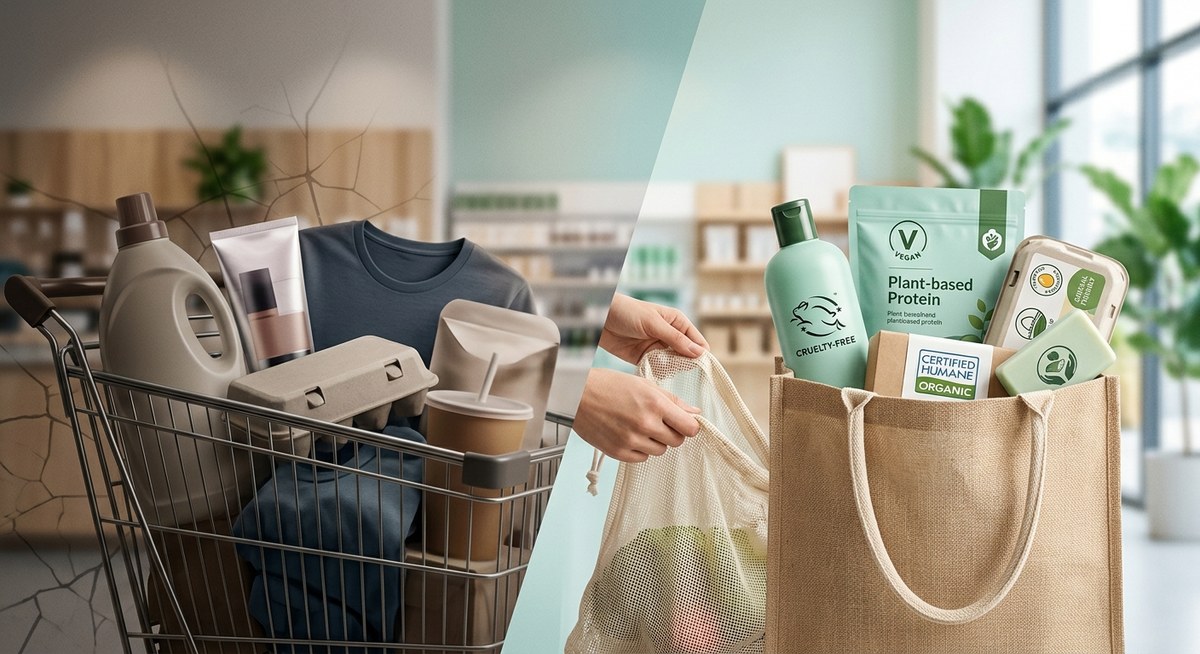
You pick up a bottle of shampoo. It has a green leaf on it. A bunny. Maybe a bamboo font. You feel good. But does that bunny mean anything? The truth is, many brands have mastered the art of looking ethical while hiding a supply chain full of animal testing, factory farming, or habitat destruction. In 2026, the gap between marketing and reality is wider than ever. If you want to align your purchases with your values, you need a smarter strategy. Let’s build one together.
Your good intentions might not be enough to stop animal suffering. Greenwashing and hidden supply chains make it far too easy to accidentally support cruelty. This guide provides an actionable framework for ethical shopping in 2026. You will learn to decode misleading labels, spot hidden animal testing, and use powerful verification tools. Whether you are shopping for fashion, food, or household goods, you can vote with your wallet for a compassionate world. Start making purchases that truly reflect your values today.
The Big Disconnect Between Intentions and Actions
Most people do not want to hurt animals. Yet the modern economy makes it almost impossible to avoid. You walk into a store, and every product seems to promise something good. Is it organic? Is it natural? Is it cruelty free?
The term “cruelty free” is not regulated in the United States. Any brand can slap a bunny on a bottle. This is called humane washing. They borrow the language of ethics without changing their practices. A shampoo brand might avoid testing on animals but still buy ingredients from a supplier that does. A clothing company might use organic cotton but line their jackets with down feathers ripped from live birds.
This is the disconnect. You want to help. But the system is built to confuse you. The good news is that you can learn to see through it. When you know what to look for, the fog clears.
What Does Ethical Shopping Actually Mean in 2026
Ethical shopping is built on three pillars. The planet. The people. The animals. A product cannot be truly ethical if it ignores any of these.
- Planet: Is the product made from sustainable materials? Does it create excessive waste?
- People: Were the workers paid a living wage? Were their rights protected?
- Animals: Were animals harmed, tested on, or exploited at any stage of production?
This guide focuses on the animal piece of the puzzle. But always remember that the pillars are connected. A product can be vegan but made in a sweatshop. It can be organic but tested on rabbits. True ethics asks you to hold the whole picture in mind. For a closer look at changing your daily habits, read our guide on how to make your home a cruelty-free zone.
The Blind Spots in Your Shopping Cart
Hidden cruelty shows up in surprising places. You might not think about it until you see the list. The table below breaks down where animal suffering hides and what you can choose instead.
| Category | Hidden Cruelty | Ethical Alternative |
|---|---|---|
| Fashion | Leather, wool, down, fur, silk | Hemp, organic cotton, recycled synthetics, cactus leather |
| Beauty | Animal testing, carmine, lanolin, collagen | Leaping Bunny certified, vegan formulas |
| Food | Factory farmed meat, eggs, dairy | Plant based proteins, pasture raised, local farms |
| Home | Testing on animals, palm oil from deforestation | Seventh Generation, Method, DIY vinegar solutions |
It is a lot to take in. You do not have to fix everything overnight. Start with one category. Fashion is a great place to begin because the alternatives are getting better every year. If you want a list of companies doing the work right now, check out 5 ethical brands that donate a portion of profits to animal welfare.
A 4-Step Process to Audit Your Shopping Habits
You need a system. Without one, you are guessing. Use this process every time you consider buying something new.
- Read the ingredient or material list. If you cannot pronounce an ingredient, look it up. Be suspicious of keratin (often ground animal parts), collagen, glycerin, and stearic acid. These can come from animals unless specified otherwise.
- Look for the real bunny, not the fake one. The Leaping Bunny logo is the gold standard. It means no animal testing happened at any stage. A generic bunny drawn by the brand might mean nothing at all. Always verify the certifier.
- Check the parent company. Some natural brands are owned by massive conglomerates that test on animals in other markets. A brand can be “cruelty free” while its parent company is not. Your dollar still supports the whole. A search online will tell you the full story.
- Choose secondhand first. Thrifting is the most ethical option. It extends the life of a product and creates zero demand for new production. It is good for animals, good for the planet, and good for your wallet. For more inspiration, take a look at top 10 simple ways to support animal rescue efforts from home.
How to Spot a Genuine Cruelty-Free Certification
Not all labels are equal. Some are rigorous. Others are marketing. Here is a guide to the logos you should trust and the ones you should question.
- Leaping Bunny: The most rigorous standard. It requires a commitment to no animal testing at any stage of production. It is the gold standard for a reason.
- Vegan Action or The Vegan Society: These guarantee no animal ingredients. Be careful though. A product can be certified vegan and still be tested on animals, even if the brand claims otherwise.
- PETA Cruelty Free: PETA bans animal testing by the brand. However, they also allow brands that test “as required by law” to use their logo. This creates a gray area. Read the fine print.
- Choose Cruelty Free (CCF): Based in Australia, this is a strong international standard. It is widely recognized and respected.
“The single most important step you can take is to stop trusting logos at face value and start vetting the certifiers themselves. A logo is only as strong as the organization behind it.” – The Sound of Animals Advocacy Team
The Power of Your Dollar: Choosing Compassion Over Convenience
It is easy to feel small. Corporations are huge. Supply chains are global. What difference can one person make?
A huge difference. You are not just one person. You are a customer. Companies watch sales data obsessively. When you buy a plant based jacket, you signal demand. When you skip the leather wallet, you signal a lack of demand. This market pressure works.
“Every single dollar you spend is a vote. You are either voting for a world of compassion or a world of cruelty. There is no neutral purchase in a system built on exploitation.”
In 2026, the options are better than ever. The shift toward plant based materials and cruelty free testing is accelerating. Why? Because people spoke with their wallets. If you want to explore the next logical step in this journey, read about why plant-based living is the next frontier in animal welfare advocacy.
Your Ethical Shopping Toolkit for 2026
You do not need to memorize every ingredient or certification. Use tools. Technology makes ethical shopping easier than ever.
- Apps: Download Buycott, Cruelty Cutter, Good On You, or Yuka. Scan a barcode and get an instant breakdown of the product’s ethics.
- Websites: Bookmark the Leaping Bunny database, Ethical Consumer, and The Sound of Animals for reference.
- Browser Extensions: Install DoneGood. It shows you ethical alternatives while you browse major online stores.
These tools remove the guesswork. They give you confidence. If you want to take your advocacy offline and into your community, learn how to get started as a volunteer for local animal shelters.
Your Journey Starts with One Choice
You do not need a perfect record. You just need to start.
Pick one product you buy every week. A bar of soap. A carton of milk. A t shirt. Find the ethical version. Buy that one instead. When you know better, you do better. And when you shop better, you build a better world for animals. Your choices matter. Go make them count.