You spot a baby squirrel on the sidewalk, clearly injured. Its mother is nowhere in sight. Your heart aches, but you’re not sure what to do next. If you’ve ever felt that pull to help but didn’t know where to begin, you’re not alone. Many people want to rescue wildlife but stop because they lack a system. That’s where a neighborhood wildlife rescue network comes in. It turns good intentions into real help for animals that need it most.
Starting a wildlife rescue network in your neighborhood is possible with careful planning. You need to understand local laws, build a trained team, set up safe transport and temporary housing, and create clear protocols. This guide walks you through each legal and operational step, so you can confidently help injured or orphaned wildlife without risking fines or harming animals.
Understanding the Need and Your Role
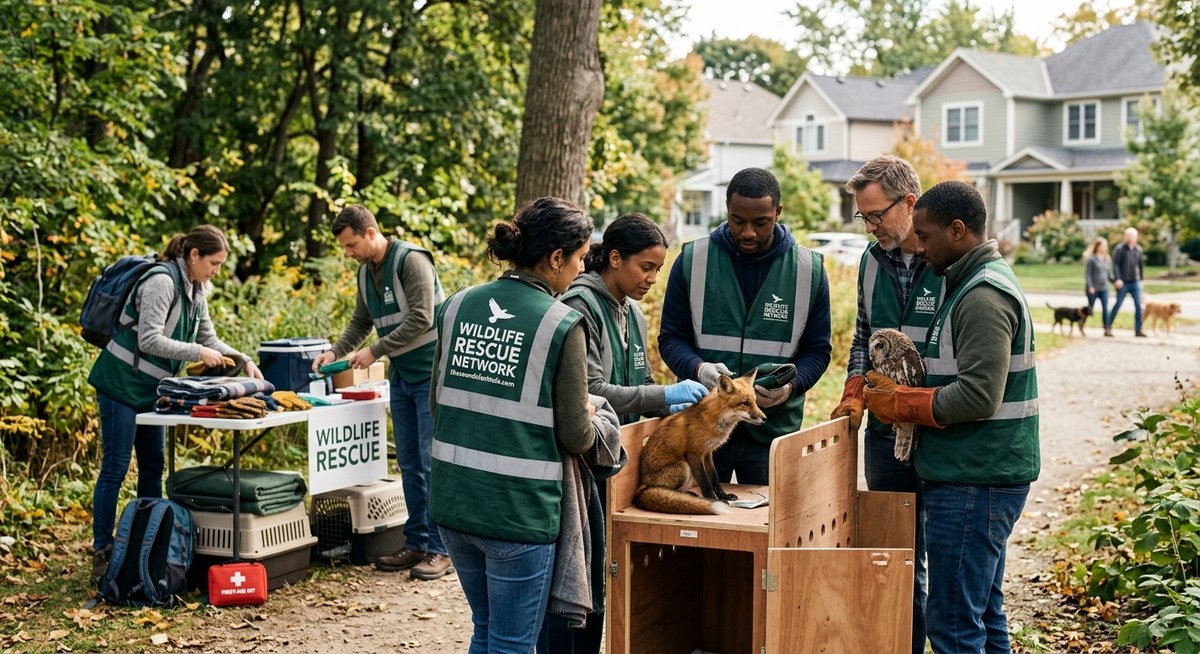
Wild animals face more dangers than ever. Cars, cats, window strikes, and habitat loss leave countless squirrels, birds, opossums, and raccoons injured or orphaned every year. Professional wildlife rehabilitators are overwhelmed. Many counties have only one or two licensed rehabbers serving hundreds of square miles. That’s where a grassroots rescue network can bridge the gap. Your role is not to treat animals yourself (that requires a license) but to organize transport, provide temporary holding, coordinate with licensed rehabbers, and educate your community.
Step 1: Research Local Laws and Permits
Before you rescue a single animal, you must know the rules. Wildlife regulations vary by state, county, and even city. In 2026, most states require a permit to possess wildlife, even for transport. Some allow unlicensed volunteers to transport animals directly to a licensed rehabber. Others require a simple “volunteer transport” registration.
- Check your state’s wildlife agency website for “wildlife rehabilitation regulations.”
- Call your county animal control or conservation office to ask about local ordinances.
- Find out if your neighborhood has any homeowners association rules that apply.
- Identify the nearest licensed wildlife rehabilitators and ask what they need from volunteers.
- Apply for any necessary permits or register as a volunteer transporter.
Without this step, you risk fines and could inadvertently harm an animal by delaying proper care.
Step 2: Build Your Core Team
You can’t do this alone. Look for neighbors who share your passion. Start with two or three reliable people, then grow slowly.
- A coordinator who handles calls and scheduling.
- Drivers with flexible hours and safe vehicles.
- A person who can maintain a temporary holding area (if your local rehabber allows it).
- Someone good with social media to spread the word.
Hold an initial meeting to discuss expectations. Use a simple sign-up sheet for shifts. Don’t take on more than your group can handle. It’s better to say no to a rescue than to promise help you can’t deliver.
Step 3: Set Up Operations and Safety Protocols
Your network needs standard procedures. Everyone must follow the same steps to keep animals and humans safe.
Here is a numbered list of the basic rescue workflow:
- Receive a call or text about an injured animal.
- Ask: species, visible injuries, location, and whether the animal is in immediate danger.
- Determine if the situation is safe to approach. Never put a human in danger.
- Contact a licensed rehabber for guidance before moving the animal.
- If approved, transport the animal in a secure, ventilated container. Use a box with air holes and a towel.
- Deliver to the rehabber or a designated drop-off point.
- Log the rescue in a simple spreadsheet: date, species, location, outcome.
Safety comes first. Wear thick gloves when handling any mammal. Use a net or towel to cover the animal. Never handle bats, raccoons, or foxes unless you are vaccinated against rabies.
Common Mistakes vs. Best Practices
| Mistake | Best Practice |
|---|---|
| Picking up an animal without checking if it truly needs help | Observe from a distance for at least 30 minutes. Many baby birds are fledglings learning to fly. |
| Feeding the animal before transport | Never feed wildlife. Wrong food can cause choking or diarrhea. Give water only if the rehabber says it’s okay. |
| Using a wire cage without a cover | Cover the carrier with a towel to reduce stress. Darkness calms most animals. |
| Trying to raise the animal yourself | This is illegal in most states and often leads to death or improper imprinting. Always hand off to a licensed rehabber. |
| Forgetting to log the rescue | Records help you track patterns, prove your network’s impact, and apply for grants later. |
“The biggest lesson I’ve learned in 15 years of wildlife rehab is that a calm, prepared volunteer is worth more than ten well-meaning but untrained people. Have one protocol, stick to it, and never skip the safety steps.” — Dr. Lisa Tran, licensed wildlife rehabilitator, Texas
Step 4: Secure Funding and Supplies
A rescue network doesn’t need a lot of money, but you will need some supplies. Start with what you can collect from neighbors: cardboard boxes, towels, unscented laundry detergent, heating pads, and latex gloves.
For ongoing costs like gas, animal food (for rehabbers to use), and veterinary bills for rehabbers, consider these options:
- Create a simple online fundraiser specific to your neighborhood.
- Ask a local pet supply store to host a donation bin.
- Partner with a community foundation that supports animal welfare.
- Apply for small grants from organizations like the American Society for the Prevention of Cruelty to Animals or the Humane Society Wildlife Land Trust.
If you want to build a more formal nonprofit later, you can learn from resources like ).
Step 5: Spread the Word and Recruit Volunteers
Your network will only succeed if people know it exists. Use low tech and high tech together.
- Post flyers at local coffee shops, libraries, and veterinary clinics.
- Create a private Facebook group or WhatsApp chat for your volunteers.
- Distribute a one page “What to Do if You Find Injured Wildlife” handout.
- Hold a monthly neighborhood meetup (even on Zoom) to share updates and train new volunteers.
- Partner with neighborhood apps like Nextdoor or WeChat for immediate alerts.
Make it easy for people to join. Have a simple sign-up form with only their name, phone number, and availability.
Also, consider hosting a workshop on animal compassion. Our guide on ) offers ideas that work for rescue groups too.
Handling Common Rescue Scenarios
Different animals need different approaches. Here’s a quick cheat sheet:
- Baby birds on the ground: If no feathers, keep them warm and return to nest if possible. If fully feathered, leave them alone unless injured.
- Squirrels found after a storm: Place in a box at the base of the tree. Mother will retrieve them. Wait 4 hours.
- Opossums (especially babies): If small enough to fit in a cup, they need a rehabber. Adults are generally transient and do not need rescue unless clearly injured.
- Raccoons: Never approach. Call a professional. They can carry distemper and rabies.
- Deer fawns: Do not touch. The mother leaves them alone for hours. Unless the fawn is crying nonstop or has visible injuries, it is fine.
Always call your local rehabber for final guidance.
Bringing Your Vision to Life
Starting a wildlife rescue network is more than a good deed. It’s a way to turn your care for animals into a lasting, organized force for good. You don’t need a big budget or years of training. You need a clear plan, a few committed neighbors, and the courage to make the first call.
Begin today. Check your local wildlife rules. Talk to one friend who might join you. The animals in your neighborhood can’t wait for a perfect system. They just need someone willing to start.
For more ideas on how to support animal welfare at home, read ). And if you’re ready to take your advocacy further, our article on ) can guide you.
Your network will grow. One rescue at a time, you’ll build a safer world for the wild creatures that share your streets.