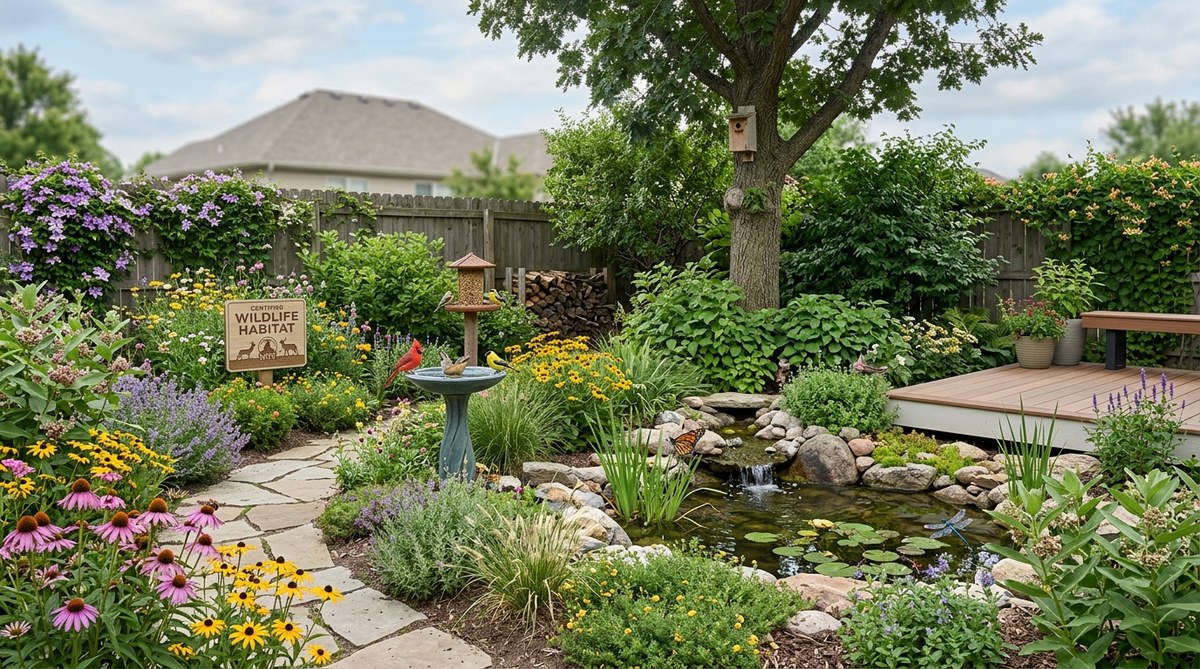
Your backyard holds more potential than you might realize. That patch of grass, those shrubs along the fence, even the corner where weeds tend to take over. Each part of your yard can become a lifeline for local birds, butterflies, bees, and small mammals. The National Wildlife Federation (NWF) has a program that makes this official. By meeting a few specific requirements, you can earn the title of a certified wildlife habitat. This means your garden is recognized as a safe space where wildlife can find food, water, shelter, and places to raise their young. Best of all, the process is straightforward and deeply satisfying. Whether you have a sprawling suburban lot or a compact city garden, you can make it happen.
Transforming your backyard into a certified wildlife habitat through the National Wildlife Federation program is a rewarding way to support local ecosystems. By providing food, water, cover, and places to raise young, plus using sustainable gardening practices, you can create a safe haven for birds, butterflies, bees, and more. This guide walks you through each step to earn your certification and help animals in your community. Start today and watch your yard truly thrive.
What Exactly Is a Certified Wildlife Habitat?
A certified wildlife habitat is a garden or yard that meets five core criteria set by the National Wildlife Federation. These criteria mirror what animals need to survive and reproduce. The NWF program started in 1973 and has since certified hundreds of thousands of habitats across the United States. Each certified space, no matter its size, becomes part of a larger network of wildlife friendly areas. Think of it as a patchwork of safe zones that help animals move, feed, and find mates.
The five elements are food, water, cover, places to raise young, and sustainable practices. You do not need to turn your yard into a wild jungle. You just need to make thoughtful choices about the plants you put in the ground, the water you offer, and how you manage pests and waste. The NWF provides a checklist, and once you check off the requirements, you can apply online for a small fee. Your yard then joins a national registry of certified habitats.
The 6 Steps to Earn Your Certified Wildlife Habitat Status
The NWF certification process can feel like a lot at first glance. But breaking it down into smaller steps makes it manageable. Here is how to move from an ordinary yard to an official certified wildlife habitat.
Step 1: Provide at Least Three Food Sources
Animals need reliable food. You can meet this requirement by adding native plants that produce berries, seeds, nuts, or nectar. Native plants are the backbone of a healthy habitat because local wildlife has evolved to depend on them. For example, oak trees support hundreds of caterpillar species that birds feed to their chicks. Milkweed is the only plant monarch butterfly caterpillars can eat. Sunflowers, coneflowers, and black eyed Susans provide seeds for finches and sparrows.
You can also supplement with bird feeders or nectar feeders. Just keep them clean to prevent disease. A simple tray feeder with black oil sunflower seeds attracts a wide range of birds. Hummingbird feeders with sugar water (one part sugar to four parts water) bring in ruby throated visitors. If you have space, consider a butterfly feeder with overripe fruit.
- Native trees and shrubs that produce berries or nuts
- Flowers that offer nectar and pollen
- Seed bearing plants like grasses and wildflowers
- Bird feeders or hummingbird feeders (supplemental)
- Host plants for caterpillars and larvae
Step 2: Add a Reliable Water Source
Every living creature needs water. For your certified wildlife habitat, you must provide at least one water source. This could be a birdbath, a small pond, a rain garden, or even a shallow dish placed on the ground. Moving water, like a small fountain or dripper, attracts more birds because the sound signals safety.
Keep the water clean and change it every few days to prevent mosquitoes. In colder months, consider a heated birdbath so birds can drink even when temperatures drop. If you have room for a pond, add native aquatic plants and a shallow edge so small animals can climb out safely.
Step 3: Create Two Types of Cover
Cover means places where animals can hide from predators and escape harsh weather. You need at least two different types. Think dense shrubs, a brush pile, a rock wall, or a patch of tall grasses. Evergreen trees and shrubs provide year round shelter. A log pile in a quiet corner gives insects and small mammals a place to hide.
Even a simple pile of fallen leaves left under a bush counts as cover. Many butterflies and moths overwinter in leaf litter. Resist the urge to make your yard too tidy. A slightly messy garden is a wildlife haven.
Step 4: Offer Two Places to Raise Young
This step is separate from cover. Animals need specific spots to nest, lay eggs, or give birth. Options include mature trees with cavities, birdhouses, bat boxes, butterfly host plants, or a small pond for amphibians. If you have an old tree with a hollow branch, leave it standing if it is safe. Woodpeckers, chickadees, and squirrels will use it.
Installing a nest box for bluebirds or wrens is a simple project. Place it at the right height and facing away from prevailing winds. For butterflies, plant milkweed for monarchs and parsley or dill for swallowtails. A small pond with rocks and plants can support frogs and dragonflies.
Step 5: Adopt at Least Two Sustainable Practices
Sustainable practices are the methods you use to maintain your yard. They reduce harm to the environment and the animals living there. The NWF looks for things like eliminating chemical pesticides and herbicides, using organic fertilizers, capturing rainwater, composting, and reducing lawn area.
Stop spraying broad spectrum insecticides. They kill beneficial insects along with pests. Instead, try hand picking pests or using insecticidal soap. Let some of your grass grow longer to support ground beetles and spiders. Start a compost pile to recycle kitchen scraps and yard waste. Rain barrels help you conserve water and keep storm runoff from polluting local streams.
Step 6: Submit Your Application and Celebrate
Once you have all the elements in place, visit the NWF website and fill out the certification application. You will need to list the specific features you added for each category. The application fee is modest, and it supports the work of the federation. After approval, you receive a certificate and an official sign to display in your yard. That sign tells neighbors and passersby that your space is a certified wildlife habitat.
Common Mistakes and How to Avoid Them
Even enthusiastic gardeners can miss a few details. Use this table to check your setup before you apply.
| Mistake | Why It Hurts Wildlife | Better Approach |
|---|---|---|
| Using exotic plants that do not support local insects | Native insects cannot eat non native plants, which breaks the food chain. | Choose at least 70% native species for your region. |
| Cleaning up all fallen leaves and dead stems | Insects and pollinators overwinter in leaf litter and hollow stems. | Leave a layer of leaves in garden beds and cut stems back in spring. |
| Placing bird feeders too close to windows | Birds collide with glass and die from injuries. | Put feeders within 3 feet of a window or farther than 30 feet. Use window decals. |
| Using chemical weed killers on the lawn | Runoff contaminates soil and water; toxins poison insects and amphibians. | Hand pull weeds or use vinegar based sprays. Accept some dandelions. |
"A certified wildlife habitat is not about having the most beautiful garden on the block. It is about creating a functioning ecosystem where native animals can find what they need to survive. Start small, add one element at a time, and watch how your yard responds." — Dr. Laurel Harmon, wildlife biologist and NWF habitat steward
Why Your Certified Wildlife Habitat Matters More Than You Think
When you earn the certified wildlife habitat designation, you join a nationwide effort. Each certified yard acts as a stepping stone for wildlife moving through neighborhoods and cities. Birds, butterflies, and even small mammals use these patches to rest and refuel during migration. In a time when natural areas are shrinking, your garden becomes part of a larger conservation network.
There are personal rewards too. You get to see more birds, butterflies, and beneficial insects up close. Your yard becomes a place of discovery for children and neighbors. You reduce your water usage and chemical footprint. And you gain the satisfaction of knowing that your daily gardening choices help animals survive.
If you are looking for other ways to support animals beyond your yard, consider reading our guide on how to advocate effectively for animal rights in your community. Advocacy can amplify the impact of your habitat work. You might also enjoy our tips on top 10 simple ways to support animal rescue efforts from home for more ideas.
Caring for Your Habitat Through the Seasons
A certified wildlife habitat needs ongoing care. In spring, resist the urge to clean up too early. Many bees and butterflies are still overwintering in stems and leaves. Wait until temperatures stay above 50 degrees Fahrenheit before you trim. In summer, keep water sources filled and watch for signs of disease at feeders. Fall is the best time to plant new native shrubs and trees. Leave seed heads on flowers so birds can eat through winter.
Winter is actually a lively season in a wildlife habitat. Birds appreciate heated water and high energy foods like suet. Leave brush piles in place; they become critical shelter during storms. You can also build a simple roosting box for birds to huddle in on cold nights.
If you want to take your advocacy further, check out our article on how to make your home a cruelty-free zone. It pairs beautifully with your habitat efforts.
Your Role in Building a More Humane Community
Your certified wildlife habitat is more than a garden. It is a statement. It tells your neighbors, your local government, and your community that you value the creatures we share this land with. When others see your NWF sign, they may ask questions. You can share what you learned and encourage them to start their own habitat. One yard becomes two, then ten, then a whole block.
Small actions add up. A single birdbath can save a chickadee on a hot day. A patch of milkweed can raise a generation of monarchs. Your compost pile feeds the soil without synthetic chemicals. Each choice matters. And when you combine those choices with the work of other advocates, you create real change for animals.
For more ways to make a difference, read our guide on 7 steps to build a more humane community for animals in 2026. It connects the dots between your backyard habitat and the bigger picture of animal welfare.
Start Transforming Your Yard This Weekend
You do not need to wait for the perfect season or a major renovation. Walk outside today and look at your space with fresh eyes. Where could you add a water source? Which corner could become a brush pile? What native plant could replace that barren patch of lawn? Pick one small change and make it happen. Then add another. Before long, you will have the elements you need to earn your certified wildlife habitat designation.
The National Wildlife Federation makes it easy. Their online checklist walks you through each requirement. Once you submit, you join a community of people who care about the same things you do. Your yard will buzz with life, and you will know you made a difference. Grab a notebook, step outside, and start planning. The animals are waiting.