You see the same stray cats every morning behind the coffee shop. The local shelter posts another urgent plea for fosters. Your neighbor’s dog spends all day tied to a chain. These moments feel small, but they add up. They are the building blocks of a community’s animal welfare reality. Changing that reality does not require a massive budget or a staff of dozens. It starts with a clear plan and the willingness to bring people together. In 2026, more towns than ever are proving that a humane community is not a distant goal. It is a daily choice. And you can help build yours right now.
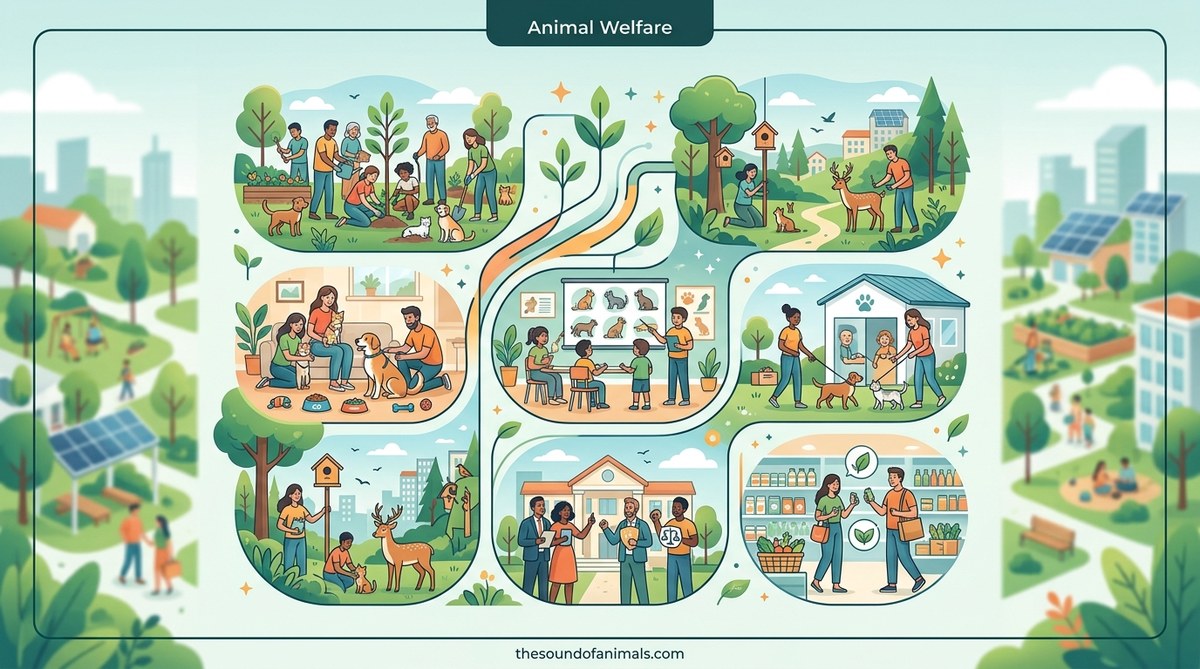
Building a humane community for animals takes seven intentional steps: assess local needs, form a coalition, educate the public, support shelters, advocate for laws, provide low-cost services, and sustain momentum. Each step builds on the last. With focused effort, any town can become a safer, kinder place for every animal that calls it home.
Step 1: Assess Your Community’s Animal Welfare Landscape
You cannot fix what you have not measured. Start by gathering data about the animals in your area. How many stray dogs and cats are there? What are the main reasons animals end up in the shelter? Are there specific neighborhoods with more cases of neglect? Reach out to your local animal control officers, shelter staff, and rescue groups. They already know the gaps.
During this assessment, also look at what resources already exist. Is there a low-cost spay/neuter clinic? Do schools offer humane education? Does the city have a trap-neuter-return (TNR) program for community cats? Documenting what works gives you a foundation to build on.
For a deeper look at how to evaluate existing programs, we cover this in How to Assess the Ethics of Your Local Wildlife Rehabilitation Center. While that focuses on wildlife, the same critical thinking applies to all local animal services.
Step 2: Form a Coalition of Local Stakeholders
One person can start a conversation, but lasting change takes a team. Build a coalition that includes shelter directors, veterinarians, business owners, educators, and concerned citizens. Do not forget the local politicians. A council member who cares about animals can help push ordinances through.
Your coalition needs a clear mission statement. Keep it simple: “We work together to make our community safe and humane for all animals.” Then define roles. Who will handle communication? Who will track legislation? Who will recruit volunteers?
When you have your team, you can begin to plan initiatives. For example, if your assessment shows that many animals come from one neighborhood, your coalition can target that area with resources and education.
Step 3: Launch Community Education and Awareness Campaigns
Many people neglect their pets not out of cruelty, but out of lack of knowledge. They may not know that leaving a dog chained outside 24/7 is harmful. They may think cats are fine outdoors on their own. Education closes those gaps.
Use multiple channels: social media, local radio, church newsletters, school assemblies. Create simple flyers with clear messages. Host a “Pet Care 101” workshop at the community center. Partner with the library for a reading program where children read to shelter animals.
A great way to get started is to look at 10 Creative Ways to Raise Awareness for Animal Welfare in Your Community. That guide offers specific, low-cost ideas that any coalition can adapt.
Step 4: Support and Expand Local Shelter and Rescue Capacity
Shelters are the safety net of a humane community. But many are stretched thin. Your coalition can help in practical ways. Organize a donation drive for food, bedding, and medical supplies. Start a foster network for animals who need time to heal or grow. Recruit volunteers to walk dogs, clean kennels, or staff adoption events.
If you are new to volunteering, check out How to Get Started as a Volunteer for Local Animal Shelters. It walks you through the first steps and tells you what to expect.
A table below shows common ways to support a shelter and the mistakes that often hold people back.
| Technique | Common Mistake |
|---|---|
| Organize a pet food drive | Forgetting to ask what the shelter actually needs (brands, sizes, wet vs dry). |
| Recruit new foster families | Assuming fosters must have a fenced yard. Many animals need temporary homes for short periods. |
| Hold an adoption event | Choosing a weekend that conflicts with other local events. |
| Share shelter animals on social media | Posting without clear adoption criteria or contact info. |
Step 5: Advocate for Stronger Animal Protection Laws
Education and support can only go so far without legal backing. Work with your coalition to identify gaps in local ordinances. Does your town have a ban on tethering dogs? Are there penalties for leaving an animal in a hot car? Is pet overpopulation addressed through mandatory spay/neuter for shelter animals?
Start with one achievable law. Maybe it is a limit on the number of pets per household or a requirement for outdoor dogs to have adequate shelter. Write a sample ordinance. Present it to your city council with data and citizen signatures. Attend public hearings and speak. The process takes patience, but every law passed saves animals.
For a roadmap on the legislative side, see How to Lobby Your Local Government for Stronger Animal Protection Laws in 2026. It breaks down exactly how to approach council members and build public support.
Step 6: Create Accessible Low-Cost Spay/Neuter and Veterinary Services
Pet overpopulation drives the cycle of suffering. The single most effective way to reduce shelter intake is to spay or neuter pets. But many families cannot afford the cost. Your coalition can raise money for a low-cost clinic or partner with an existing mobile spay/neuter van.
Think beyond just dogs and cats. If your community has a feral cat colony, a TNR program is essential. Work with rescue groups to trap, spay/neuter, vaccinate, and return healthy cats to their outdoor homes. It is proven to stabilize populations and reduce nuisance complaints.
Also offer occasional low-cost vaccine clinics. Keeping pets healthy keeps them in their homes and out of the shelter.
Step 7: Sustain Momentum Through Ongoing Engagement
Building a humane community is not a one-time project. It is an ongoing commitment. Celebrate wins, even small ones. Share success stories on social media and in local newspapers. Recognize volunteers with an annual appreciation event. Keep your coalition meeting regularly, even when there is no crisis.
Revisit your assessment every year. Has the stray population dropped? Are fewer animals euthanized? Is the shelter seeing more adoptions? Use that data to adjust your priorities.
You can also keep people engaged by offering fresh ways to help. For example, 10 Ways You Can Support Local Animal Shelters in 2026 provides a ready-made list for your community to try.
“The most humane communities are not the ones with the biggest shelters or the most funding. They are the ones where people show up consistently, year after year, for the animals.”
— Dr. Keisha Williams, director of Community Animal Health Partners
Common Pitfalls to Avoid
Bulleted list of mistakes that derail community efforts:
- Starting too big. Trying to solve every problem at once leads to burnout. Pick one or two priorities for your first year.
- Ignoring the human element. People who are struggling with their own needs will not prioritize pet care unless you also offer help with food, housing, or transportation.
- Going it alone. Even a small group is stronger than a lone advocate. Build your coalition early.
- Forgetting to celebrate. Without recognition, volunteers drift away. Thank people publicly and often.
Turning Plans into Action
A table to summarize the steps and the typical timeline:
| Step | Estimated Time | Key Action |
|---|---|---|
| Assess | 1-2 months | Gather data from shelters and clinics |
| Form coalition | 1 month | Recruit 6-10 diverse members |
| Launch education | Ongoing | Host monthly workshops and social media campaigns |
| Support shelters | Ongoing | Recruit fosters, collect supplies |
| Advocate | 6-12 months | Draft ordinance, build community support |
| Low-cost services | 3-6 months | Fundraise or partner with clinics |
| Sustain | Continuous | Annual review and celebration |
Your Next Move Starts Today
You do not need to wait for the perfect plan or a big budget. Start with step one: talk to your local shelter. Ask them what they need most. Then invite two friends to help. Those small actions will ripple outward. By this time next year, your community could look very different. Fewer animals on the street. More people aware of their needs. Stronger laws protecting them. A network of people who care.
Build it step by step. Build it together. The animals are counting on you.