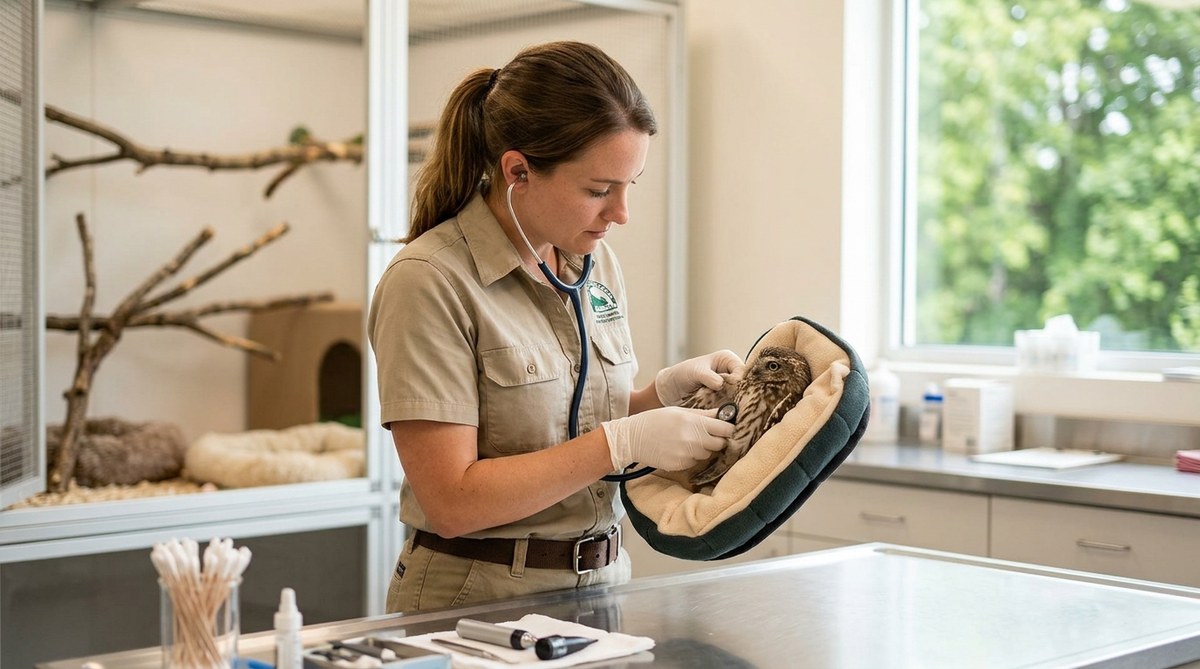
Not every facility that calls itself a wildlife rehabilitation center operates with the same level of care or compassion. You want to help, and that instinct is wonderful. But handing over an injured squirrel or orphaned fawn to someone who lacks proper training, permits, or humane standards can cause more harm than good. That is why understanding wildlife rehabilitation ethics is so important. It gives you the power to choose a center that truly puts animals first.
Ethical wildlife rehab centers prioritize release over captivity, follow state and federal permits, keep wild animals wild, and use euthanasia only when necessary for suffering relief. To assess a center, check for transparency, ask about their release rates, look for clean enclosures that minimize human contact, and confirm they have a veterinarian on call. Avoid any facility that lets you pet or interact with patients.
What Defines Ethical Wildlife Rehabilitation
Wildlife rehabilitation ethics rest on one core principle: the animal’s best interest. Unlike domestic pet care, the goal is not to make the animal tame or comfortable in a cage. The goal is to return it to the wild, healthy and able to survive on its own. An ethical center never treats wildlife like pets. It does not put animals on public display for profit, and it does not allow unsupervised volunteers to handle sensitive species.
Every ethical rehabber works under a set of legal requirements. In the United States, that means holding valid permits from both state wildlife agencies and, for migratory birds and marine mammals, the U.S. Fish and Wildlife Service or NOAA. These permits come with conditions about housing, veterinary care, and record keeping. If a center cannot show you its permits when asked, that is a major warning sign.
Another pillar of ethical practice is the “do no harm” standard. This includes knowing when to euthanize. A broken wing that cannot heal, a severe neurological injury, or a disease that could spread to the wild population may mean the kindest act is a humane death. Good centers have clear euthanasia protocols and are not afraid to use them. Bad centers hold onto suffering animals out of guilt or to attract sympathy donations.
Red Flags That Should Make You Hesitate
You can spot a questionable center by watching for these behaviors. Keep them in mind during your first visit or phone call.
- No permits posted or offered. Many ethical centers proudly display their state and federal permits near the entrance or on their website. If you ask and get a vague answer, that is a warning.
- Unlimited visiting hours or open houses. Wildlife patients need quiet and minimal human contact. A center that invites the public to walk through at any time is stressing the animals for attention.
- Animals in your lap. If a staff member places a baby raccoon or a fox in your arms for a photo, leave. That animal is becoming habituated to humans, which ruins its chance of survival in the wild.
- Lack of separation between species. Birds of prey should not be visible to songbirds. Predators and prey housed side by side create chronic stress.
- No veterinarian on call. Rehabbers without a licensed vet relationship cannot legally use certain medications or perform surgeries. This is a safety and ethics violation.
- Secrecy about release rates. Ethical centers track outcomes. They can tell you approximately how many patients they release each year. If they dodge the question, they may be keeping animals too long or not working toward release.
How to Evaluate a Center in Five Steps
Ready to assess a place in your area? Use this numbered process. It works whether you are looking to volunteer, donate, or bring in an injured animal.
-
Start with an online search. Look for the center’s website or social media. Check for photos of animals in clean, species-appropriate enclosures. Read recent reviews on Google or Facebook, but take extreme comments with a grain of salt. A few negative reviews from angry people who were turned away because their “pet” squirrel was not taken may not reflect the center’s ethics at all.
-
Call and ask for a tour. Ethical centers are usually happy to show you around, though they may schedule it during nonfeeding times to reduce stress. If they refuse entirely, that is suspicious. During the tour, note the smell. A clean center smells like hay, wood shavings, and disinfectant, not rotting food or feces.
-
Request to see their permits and vet records. You do not need to inspect every paper. Just ask if they hold a state rehabilitation permit and a federal migratory bird permit. If they treat raptors, they need both. A good facility will point you to a binder.
-
Ask about their euthanasia policy. This is uncomfortable but essential. Listen for honest answers like “we euthanize animals that cannot be released with a good quality of life.” If they say “we never euthanize,” that is a red flag. It often means they let animals suffer or keep them in cages indefinitely.
-
Observe how staff talk about the animals. Do they refer to them by name like pets? Do they cuddle with them in front of visitors? That is a sign of emotional attachment that overrides the release goal. Professional rehabbers use case numbers, not names, and handle animals only when necessary.
Common Ethical Mistakes and the Right Practices
The table below compares typical pitfalls with what you should see in an ethical center.
| Mistake | Ethical Best Practice |
|---|---|
| Keeping animals for public education without a separate education permit | Education animals must be nonreleasable and housed according to USDA standards; separate from rehab patients |
| Feeding inappropriate diets (cow’s milk for squirrels, uncooked rice for birds) | Species-specific formulas recommended by trained wildlife vets |
| Overcrowding enclosures with multiple species | Clean, appropriately sized cages with one species per space unless compatible natural groupings |
| Releasing animals in the same area without considering territorial conflicts | Soft release or translocation planning to ensure survival |
| Not disinfecting between patients | Strict quarantine and cleaning protocols using wildlife-safe disinfectants |
| Using volunteers to perform medical procedures without supervision | Volunteers only assist; licensed veterinarian or experienced rehabber handles treatment |
The Gray Area of Euthanasia
This topic deserves a closer look because it is where many well meaning people get confused. Seeing a healthy looking fox with a leg injury being put down can feel wrong. But wildlife rehabilitation ethics require looking at the whole picture.
“We do animals no favors by keeping them alive if they cannot feel safe, hunt, or avoid predators once released. Euthanasia is not failure. It is the final act of compassion we owe them.” — Dr. Rena Carlson, wildlife veterinarian
A center that euthanizes a high percentage of incoming patients may have strict criteria, which is actually a sign of integrity. A center that never euthanizes may be warehousing animals indefinitely. That is not kindness. It is a slow loss of wildness and dignity.
How Your Support Helps Raise the Bar
Every dollar and hour you give sends a message. When you choose a center with strong wildlife rehabilitation ethics, you reward good behavior. That encourages other facilities to improve. You can also use your voice to advocate for better standards in your state. Many rehabbers operate on shoestring budgets and outdated knowledge. Supporting them with donations of proper equipment or funding for training courses helps them do better.
You can also get involved by helping to educate your neighbors. If you find a baby bird or a rabbit, knowing where to take it and why some centers are better than others makes you a resource for your community. For more ways to turn your concern into action, check out this guide on how to advocate effectively for animal rights in your community. And if you want to start supporting rescue work from your living room, we have ideas for top 10 simple ways to support animal rescue efforts from home.
Trust Your Instincts, But Check the Facts
You already care deeply about animals. That is the most important ingredient. Now you have a framework to turn that care into informed action. Always look for transparency, permits, release focused care, and a clear euthanasia policy. Do not be afraid to ask hard questions. The best rehabbers will welcome your curiosity because they know their work is good.
And if something feels off, it probably is. Move on to another center, or consider becoming a volunteer at a facility that meets your standards. Your determination to uphold strong wildlife rehabilitation ethics will ripple outward, helping wild animals get the second chance they deserve.