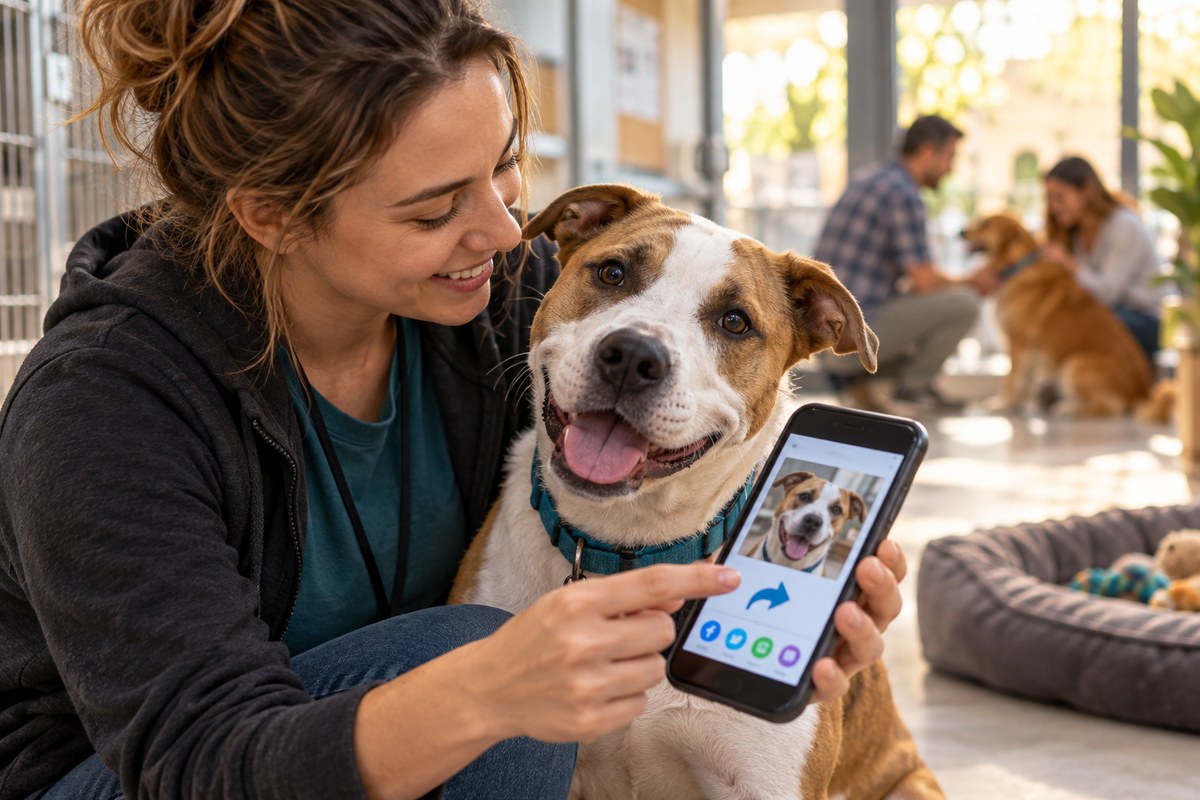
You’re scrolling through your feed, and a photo of a scruffy terrier mix named Mabel stops you cold. Her eyes are soft, her ears are tilted, and the caption says she’s been at the shelter for 132 days. You tap share. That’s it. Two seconds of your day. And the next morning, a woman who didn’t even know she was looking for a dog sees Mabel on her coworker’s timeline. By noon, Mabel is on her way to a forever home. This is the power of a single share. It’s not magic. It’s math. Every time you repost a shelter pet, you expand their audience by hundreds, sometimes thousands, of eyes. And in 2026, when shelter populations are still strained and adoption rates need a boost, that small act can be the difference between a pet finding a home or being overlooked.
Social media shares are the most underused tool in animal rescue. A single post from a volunteer can reach a friend who knows a friend who adopts. This guide gives you a repeatable process to turn your personal accounts into lifesaving channels, without burning out or spending hours online.
Why Your Personal Share Matters More Than a Shelter’s Post
Shelter pages are great, but they often preach to the choir. Your personal profile, on the other hand, reaches people who may not follow any rescue organizations. You have a built-in network of friends, family, coworkers, and old college buddies. When you share a shelter pet, you are introducing that animal to a completely new audience.
Think of it this way: a shelter’s Facebook page might have 5,000 followers, but most of those followers already care about adoption. Your 300 friends include your aunt who just lost her cat, your neighbor who mentioned wanting a running buddy, and your former classmate who runs a dog-friendly business. You are the bridge.
The 5-Minute Rescue Process
You don’t need to be a social media manager. You don’t need fancy apps. Here is a simple process that takes about five minutes and can be done while you wait for your coffee to brew.
-
Pick one pet. Go to your local shelter’s Facebook or Instagram page. Choose the animal that has been there the longest, or the one whose photo makes you smile. Do not overthink it. Just pick one.
-
Copy the caption. You don’t need to write original copy. Shelters spend time crafting those bios. Copy the text, but add one personal sentence. Something like, “I met this sweet girl yesterday and she was so gentle with my kids.”
-
Share with a story. Do not just hit the share button. Add a short note. Tell people why this pet caught your eye. A personal connection drives action.
-
Tag two friends. Tag people who might be looking. Use the @ symbol and their name. This is not spam. It is a gentle nudge. Tag your cousin who is always talking about getting a dog. Tag your running partner who wants a companion.
-
Post and walk away. Do not watch the likes. Do not refresh. You did your part. The algorithm will do the rest.
What to Share and What to Skip
Not all content is created equal. Some posts are more likely to result in an adoption. Here is a breakdown of what works best for shelter pets.
| Content Type | Why It Works | Common Mistake |
|---|---|---|
| Video of a pet playing | Shows personality and energy. People fall in love with movement. | Posting a video that is too long. Keep it under 30 seconds. |
| Before and after photos | Tells a story of transformation. Builds emotional connection. | Using low-quality or dark images. Bright, clear photos matter. |
| A pet with a volunteer | Shows the animal is social and friendly. Human presence builds trust. | Posting a photo where the animal looks scared or uncomfortable. |
| A simple headshot with a clear bio | Easy to scan. The bio answers the key questions: age, size, temperament. | Overloading the caption with jokes or irrelevant details. |
Common Mistakes That Hurt Adoption Chances
Even well-meaning shares can backfire. Here are the most common errors volunteers make, and how to fix them.
- Using a blurry photo. A blurry image makes a pet look unkempt or anxious. Always wait for a clear shot. If the shelter’s photo is bad, ask if you can take your own.
- Writing a negative caption. Avoid phrases like “nobody wants her” or “she’s been returned twice.” It frames the pet as damaged. Instead, say “this sweet girl is still waiting for her person.”
- Sharing too many pets at once. Posting a collage of ten animals overwhelms the viewer. They scroll past. One pet at a time gets the attention they deserve.
- Forgetting to include location. A share without a city name is useless. Someone in Texas cannot adopt a pet in Ohio. Always tag the shelter and the city.
“The best adoption posts are the ones that make the viewer feel something specific. Not pity. Hope. When you share a photo of a dog wagging his tail, you are inviting someone to imagine that tail wagging in their living room.” — Sarah K., volunteer coordinator at Austin Animal Center
How to Get Your Friends to Act
Sometimes you share a post and nothing happens. That is normal. But you can increase the odds by making it easy for your friends to take the next step.
- Add a direct link. If the shelter has an adoption application or a “meet me” page, paste the link into your comment or caption. Remove any friction.
- Offer to be a reference. Write something like, “I can vouch for this sweet boy. He is house-trained and great with kids. Message me if you have questions.”
- Share updates. If you know a pet got adopted, post a happy update. It shows your network that sharing works, and it encourages them to share the next one.
A Simple Table of Dos and Don’ts
| Do | Don’t |
|---|---|
| Share one pet at a time | Share a grid of ten pets |
| Write a personal note | Just hit share with no text |
| Tag two relevant friends | Tag your entire friend list |
| Use a clear, bright photo | Use a dark or blurry photo |
| Include the shelter’s location | Assume people know where it is |
Building a Habit That Lasts
The biggest barrier to using social media to save shelter pets is consistency. Volunteers often feel like they have to do something big and dramatic. They don’t. A single share a week is enough to make a difference. Here is how to build a sustainable habit.
- Set a recurring reminder. Put a weekly alarm on your phone for Wednesday morning. It takes 5 minutes. Treat it like a small ritual.
- Follow only one shelter closely. If you follow too many, you will feel scattered. Pick the shelter closest to your home and focus on their posts.
- Rotate pets. Do not share the same animal every week unless they are still waiting. Spread the love.
- Celebrate small wins. When a pet gets adopted after your share, allow yourself to feel good. That feeling will fuel your next post.
If you want to take your advocacy further, consider reading more about how to advocate effectively for animal rights in your community. There are also top 10 simple ways to support animal rescue efforts from home that pair well with your sharing habit.
The Ripple Effect You Cannot Measure
Not every share will lead to an adoption. Some posts will get two likes and disappear. But you will never know which share is the one that works. The terrier mix named Mabel from the opening of this article? She was shared by a volunteer who almost skipped her Wednesday alarm. She hit share, made a cup of tea, and went to work. That afternoon, a woman named Diane saw the post on her lunch break. Diane had been thinking about adopting a dog for months. She clicked the link, filled out the application, and picked up Mabel the next day.
Diane did not know the volunteer. The volunteer did not know Diane. But that five-second share connected them.
Your Next Step
Open your phone right now. Go to your local shelter’s page. Find one animal that has been waiting a long time. Hit share. Add a sentence. Tag two friends. Walk away. You just did something that matters. And if you do it again next week, and the week after, you will become part of a network of people who are quietly, consistently saving lives. No cape required. Just a thumb and a heart.