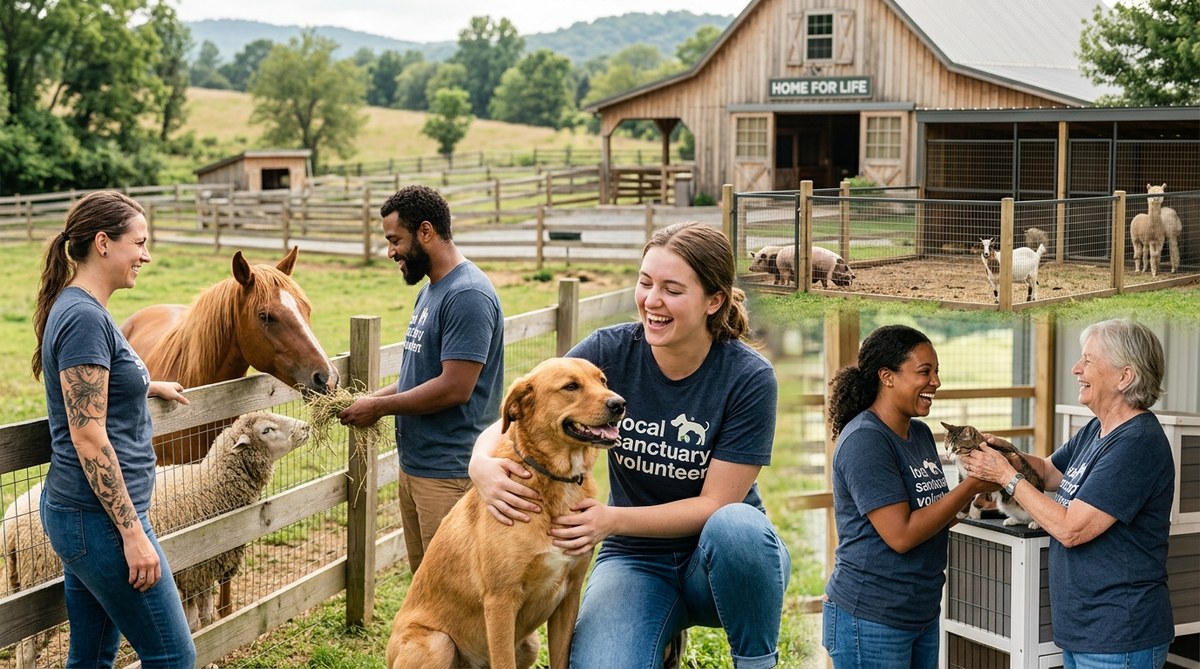
Every morning, volunteers at Maple Creek Sanctuary in Oregon arrive before sunrise. They feed 30 goats, check on three injured owls, and comfort a shy pig who arrived last week. Their work is not just about animals. It is about building a community that cares. Now think about your own neighborhood. There is probably a sanctuary or rescue nearby that could use your help. The question is: why should you get involved? The answer goes much deeper than you might expect.
Local animal sanctuaries do more than shelter animals; they heal communities, educate families, and reduce stray populations. Your support, whether through donations, volunteering, or advocacy, creates a ripple effect that extends far beyond the fences. By choosing to invest in a sanctuary near you, you save individual animals while strengthening your neighborhood’s social fabric. This article reveals the true impact and offers practical ways to make a lasting difference. Small actions lead to meaningful change.
The Ripple Effect Beyond the Animals
Supporting a local sanctuary is an act of community building. When you donate time or money, you help fund programs that prevent animal suffering before it starts. Many sanctuaries offer low cost spay and neuter clinics. Others send educators to schools to teach children about compassion. These efforts reduce the number of homeless animals and create safer, more humane neighborhoods.
But the benefits are not one sided. People who volunteer at sanctuaries report lower stress, a stronger sense of purpose, and new friendships. A 2026 study from the University of Cincinnati found that regular volunteers at animal rescues had 30% fewer symptoms of anxiety. The sanctuary becomes a gathering place where people from all backgrounds work side by side.
How Your Support Changes Lives
- Prevents unnecessary euthanasia in overcrowded county shelters.
- Provides medical care for injured and sick animals who would otherwise be ignored.
- Gives second chances to old, disabled, or overlooked animals that most people pass by.
- Funds spay and neuter programs that stop overpopulation at the source.
- Trains forever families through adoption counseling and follow up support.
Each of these actions creates a domino effect. A single spay surgery can prevent dozens of litters. A well placed adoption can free up space for the next rescue. Your help multiplies.
A Practical Guide to Getting Involved
If you want to know why support local animal sanctuaries matters for your own community, follow these steps to get started today.
- Find a sanctuary near you. Search online or ask your local vet for recommendations. Read reviews and visit their website to understand their mission.
- Contact them directly. Call or email to ask about volunteer orientations, wish lists, and donation policies. Be specific about what you can offer.
- Offer your specific skills. Sanctuaries need more than dog walkers. Accountants can help with bookkeeping. Photographers can take adoption photos. Teachers can lead field trips.
- Make a recurring donation. A monthly gift of $15 covers routine vaccinations for one animal. It is more valuable than a one time gift because it provides predictable income.
- Spread the word organically. Share their success stories on social media. Talk about them at your local farmer’s market. Word of mouth brings in new volunteers and donors.
Common Mistakes to Avoid When Supporting Sanctuaries
Even well meaning people can accidentally cause problems. This table shows three common pitfalls and smarter alternatives.
| Mistake | Why It Happens | Better Approach |
|---|---|---|
| Donating money without research | Assumption all charities are equally ethical | Check their 501(c)(3) status, read annual reports, and look for transparent financial records. |
| Dropping off used items without asking | Wanting to help, but unaware of specific needs | Call first or check their online wish list. Many sanctuaries cannot accept old towels or broken crates. |
| Only giving during holiday seasons | Busy schedules and seasonal marketing | Set up a small monthly donation. Consistent funding lets sanctuaries plan for emergencies year round. |
What the Experts Say
“The most effective support is consistent support. A small monthly gift can cover a year’s worth of vaccinations for one animal. But if every supporter gave just $5 a month, we could expand our educational programs to reach every elementary school in our county.”
— Sarah Mitchell, Executive Director of Havenwood Animal Sanctuary in Vermont
That kind of collective action is exactly why support local animal sanctuaries is not just a charitable act. It is an investment in your own community’s health and humanity.
How to Advocate When You Can’t Volunteer
Not everyone can walk dogs or clean kennels. That is okay. If you want to learn how to advocate effectively for animal rights in your community, you can use your voice and your wallet. Write a letter to your local newspaper about a sanctuary’s work. Host a small fundraising event at your home. Contact your city council to support better animal protection laws. Advocacy does not require a uniform. It requires intention.
For more ideas, read our guide on how to advocate effectively for animal rights in your community. It breaks down practical ways to influence change without leaving your living room.
Small Habits That Create Big Change
Start with one tiny commitment. Put a reminder on your phone to donate $10 on the first of every month. Follow a local sanctuary on social media and share one post per week. Sometimes, just showing up with a bag of dog food can brighten a volunteer’s entire day.
The animals you help will never be able to thank you in words. But you will see it in their eyes. You will feel it in the wag of a tail or the purr of a cat who finally feels safe. And your neighbors will notice too. A community that cares for its animals is a community that cares for itself.
This year, 2026, let action be your answer. Find a sanctuary near you. Give what you can. Watch what happens next.