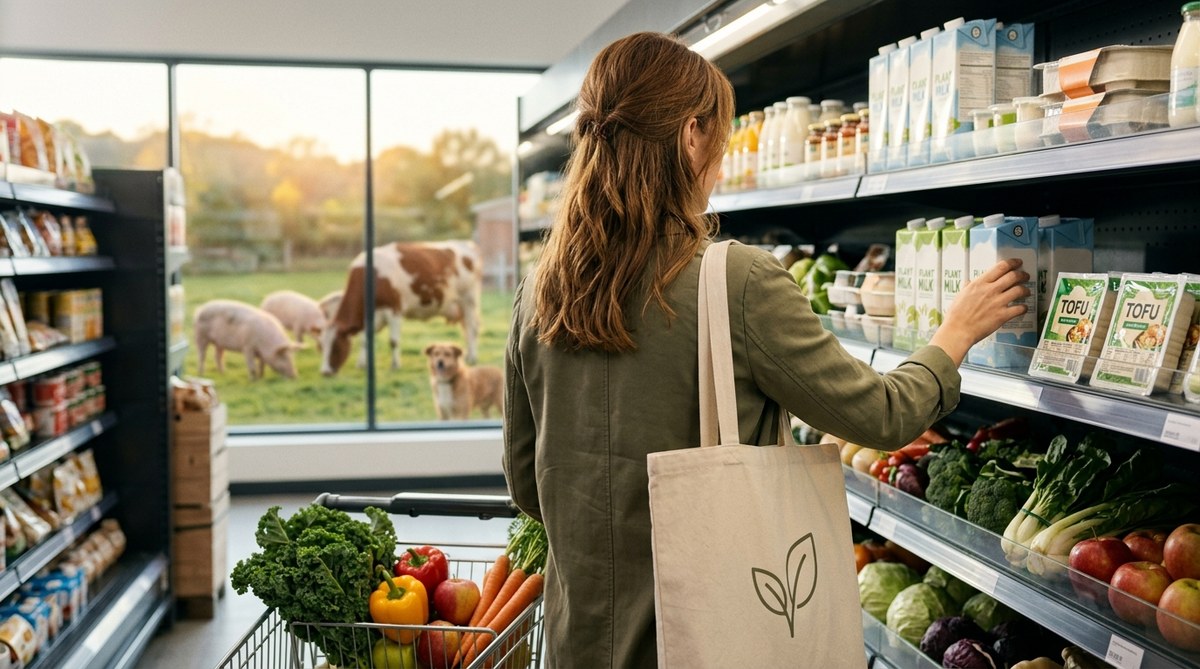
Your weekly trip to the supermarket is more than a chore. It is a quiet vote for the kind of world you want to live in. Every item you drop into your cart sends a signal to producers, distributors, and retailers about what matters to you. In 2026, that signal has never been louder or more direct. The connection between your grocery list and animal welfare is concrete, measurable, and immediate.
Your daily food choices directly reduce animal suffering. By choosing plant-based proteins, certified humane products, and brands that donate to shelters, you lower demand for factory farming. Every dollar spent on ethical items funds better living conditions for farm animals and supports rescue organizations. Small swaps at the grocery store create a ripple effect that saves lives.
The Hidden Impact of Your Shopping Cart
Most people do not realize that their grocery budget is one of the most powerful tools they have for animal advocacy. Factory farming relies on consumer demand. When you choose alternatives, you shrink that demand. In 2025, plant-based food sales in the United States grew by another 8 percent, pushing total market value past $9 billion. That growth is driven by shoppers like you who understand that grocery shopping helps animals by shifting economic incentives.
How Demand Changes the Supply Chain
Think of your purchase as a signal. When you buy a carton of oat milk instead of dairy, the store orders more oat milk next week. The distributor notices. The farmer notices. Over time, entire supply chains rotate toward cruelty free options. This is not theory. Major dairy companies have launched plant based lines specifically because of consumer demand at the register.
3 Practical Ways to Make Your Next Trip Count
You do not need a complete lifestyle overhaul to make a difference. These three steps are simple, repeatable, and backed by real impact.
-
Swap one animal product per week. Start with the easiest switch. Replace cow milk with oat or soy milk. Swap ground beef for lentils in your chili. Choose a bean burrito instead of a chicken one. One swap per week adds up to 52 changes per year. That reduces demand for factory farmed animals in a meaningful way.
-
Look for third party certifications. Labels like Certified Humane, Animal Welfare Approved, and Global Animal Partnership mean the animal lived under specific welfare standards. These certifications require regular inspections. They are not perfect, but they are far better than no label at all. If your store does not carry these products, ask the manager. Customer requests drive shelf placement.
-
Buy from brands that donate to shelters. Several pet food and treat companies donate a portion of every sale to local animal rescues. When you buy these items, you directly fund food, medical care, and adoption programs for shelter animals. This is a double win: you feed your pet and help homeless animals at the same time.
Common Mistakes vs. Smart Choices
Knowing what to look for can be confusing. Labels are not always clear. Here is a table that breaks down common pitfalls and better alternatives.
| Mistake | Why It Hurts Animals | Smarter Choice |
|---|---|---|
| Buying the cheapest eggs | Usually comes from battery cages where hens cannot spread their wings | Choose pasture raised or Certified Humane eggs |
| Ignoring the seafood label | Many fisheries use trawling that kills dolphins and sea turtles | Look for MSC (Marine Stewardship Council) or avoid seafood entirely |
| Grabbing generic pet food | Often contains byproducts from factory farms with low welfare standards | Pick brands with named proteins and shelter donation programs |
| Buying non dairy creamer with casein | Casein is a milk protein that still supports dairy farming | Choose a creamer labeled vegan or made from coconut, oat, or soy |
| Assuming organic means humane | Organic standards focus on feed and antibiotics, not living conditions | Look for both organic AND a specific animal welfare label |
The Ripple Effect on Local Shelters
Your grocery choices extend beyond the farm. Many rescue organizations partner with grocery stores for donation programs. Some stores let you round up your total at checkout, with the difference going to local animal shelters. Others have dedicated shelves where you can buy food and supplies that are delivered directly to rescue groups.
If you want to take this further, consider organizing a neighborhood pet food drive for shelters in need. This turns your personal shopping habit into a community effort.
A Quick Action Plan for Your Next Visit
- Before you leave home, check your pantry. Write down three animal based items you can replace.
- Bring a list of certified brands so you do not get distracted by marketing claims.
- At the store, spend an extra two minutes in the dairy aisle reading labels.
- If you see a product with a shelter donation tag, grab it.
What the Experts Say
“The single most effective action an individual can take for farm animals is to reduce consumption of animal products. Every meal is an opportunity to vote against suffering. The grocery store is where that vote is cast.”
Dr. Melanie Joy, psychologist and author of Why We Love Dogs, Eat Pigs, and Wear Cows
This is not about perfection. It is about direction. A person who reduces their animal product intake by 50 percent prevents far more suffering than someone who does nothing because they cannot commit to 100 percent.
Reading Labels Like a Pro
Grocery shopping helps animals most when you know how to separate real claims from marketing fluff. Here are the key terms to watch for.
- Cage free means the hens are not in cages, but they may still be packed into crowded barns. It is a step up from battery cages, but not ideal.
- Free range means the animals have some outdoor access. The amount of time outside and the quality of that space varies wildly.
- Pasture raised is the gold standard for eggs and poultry. Animals spend most of their lives outdoors on pasture.
- Grass fed applies to beef and dairy. It means the animal ate grass instead of grain, but it does not guarantee humane treatment.
- No antibiotics means the animal was not given routine antibiotics. This is good for public health but says nothing about living conditions.
If you want a deeper look at how to avoid hidden animal cruelty in your purchases, read our guide on how to shop ethically without unknowingly supporting animal cruelty.
The Role of Plant Based Living
Shifting toward a plant based diet is the single most powerful change you can make for animals. It cuts out the demand for factory farming entirely. In 2026, the options are better than ever. Plant based burgers that taste like beef are available at almost every major grocery chain. Vegan cheese has improved dramatically. Milk alternatives are cheaper than dairy in many stores.
You do not have to go vegan overnight. Start with one meal a day. Make breakfast plant based. Try oat milk in your coffee. Use peanut butter instead of butter on your toast. These small changes compound.
For more on this lifestyle shift, check out our piece on why plant based living is the next frontier in animal welfare advocacy.
How to Support Animal Rescue Without Changing Your Diet
Maybe you are not ready to change what you eat. That is okay. You can still use your grocery trip to help animals. Here are ways to do that.
- Buy pet food from brands that donate meals to shelters. Some brands match every purchase with a donation to a rescue organization.
- Purchase reusable bags at checkout when the store donates the proceeds to animal charities.
- Look for “round up” programs at the register. Many stores let you donate your change to local animal welfare groups.
- Buy extra canned goods or dry food and drop them off at your local shelter. Most shelters accept unopened pet food donations.
If you want to expand your impact beyond the store, read about ways to support animal rescue efforts from home.
Building a Humane Shopping Habit
This is not a one time fix. It is a habit. Like any habit, it gets easier with repetition. After a few weeks, reading labels becomes automatic. You will know which brands to trust and which to avoid. You will start to notice which stores carry the best ethical options.
Track your progress. Notice how many animal products you replaced this month compared to last. Celebrate the small wins. Every dollar you spend on a cruelty free product is a dollar that does not fund factory farming.
To make this a permanent part of your lifestyle, consider our 7 steps to build a more humane community for animals in 2026.
Your Next Grocery Trip Is a Rescue Mission
The produce aisle, the dairy cooler, the meat counter, the pet food section. Every part of the store holds a chance to reduce suffering. You do not need a special title or a big donation. You just need to pay attention and make one better choice at a time.
Start this week. Pick one swap. Buy one certified humane product. Grab one extra can of food for the shelter. That trip will save an animal. The next one will save another. Over a year, those trips add up to a life of real, measurable impact. And that is the kind of shopping list worth writing.