You drop your dog off at daycare, kiss her on the head, and wave goodbye. But what happens after you close the door? For conscious pet owners who treat their dogs as family, that question is everything. In 2026, the pet care industry is still largely unregulated, which means a shiny website and friendly staff don’t always equal ethical treatment. You need a real way to tell the difference between a daycare that truly cares and one that just puts on a good show. That’s why we built this ethical dog daycare checklist. It is designed to help you audit your current provider with confidence, so you can rest easy knowing your pup is in good hands.
This ethical dog daycare checklist gives you a clear, actionable framework to evaluate any facility. You will learn the five core pillars of humane care: transparency, staffing ratios, sanitation, enrichment, and emergency protocols. Use it to spot red flags, ask better questions, and make informed choices that protect your dog’s physical and emotional well being.
The Five Pillars of an Ethical Dog Daycare
Before you can audit a facility, you need to know what to look for. Ethical dog daycare is built on five non negotiable pillars. If a provider skimps on any of these, your dog is not getting the care she deserves. Think of this as your personal rubric for responsible pet care.
Transparency and Open Door Policies
An ethical daycare has nothing to hide. They should welcome unannounced visits, not require 48 hours notice for a tour. If a facility tells you that you can only visit during certain hours or that they do not allow parents to walk through the play areas, that is a major red flag. You should be able to see the playrooms, the nap areas, and the outdoor spaces at any time during operating hours.
Ask to see their daily schedule posted on a wall. A good provider will have a clear routine that includes rest, play, feeding, and potty breaks. They should also share their cleaning protocols with you without hesitation. If they get defensive or vague, trust your gut.
Staff to Dog Ratios That Actually Work
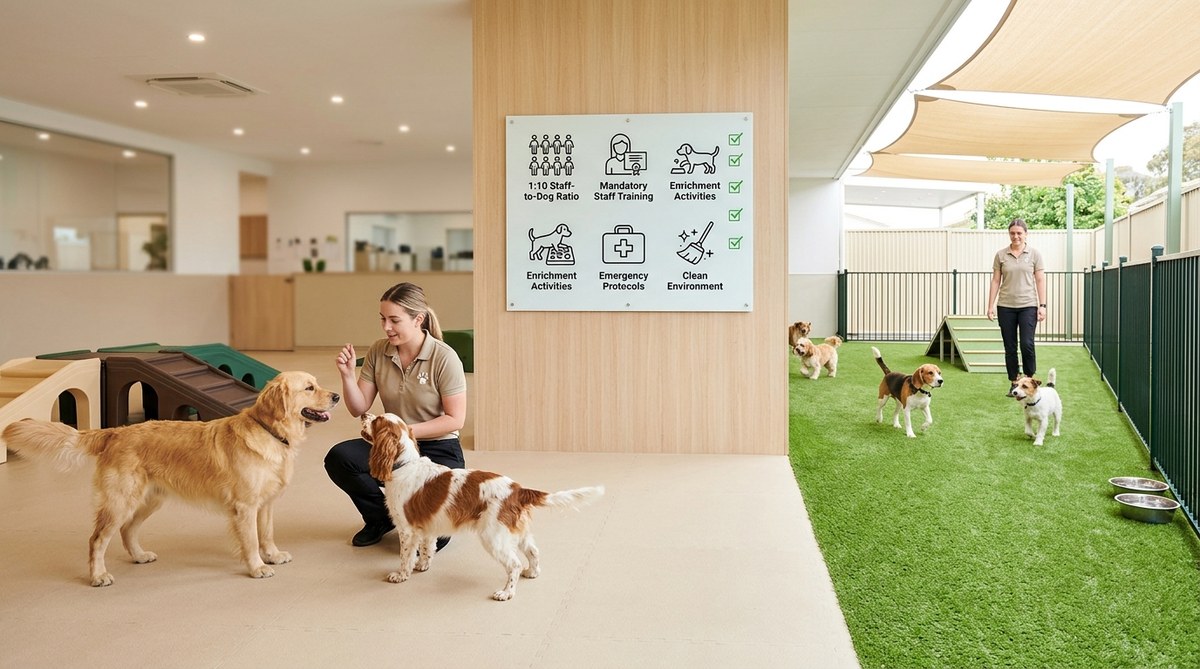
This is one of the most overlooked factors in an ethical dog daycare checklist. The industry standard for group play is one staff member for every 10 to 15 dogs. But that number is often too high for high energy or large breed groups. A truly humane facility will keep ratios lower, especially for puppies and dogs with special needs.
Here is a simple rule of thumb:
| Group Type | Recommended Staff to Dog Ratio | Common Red Flag |
|---|---|---|
| Small breed / low energy | 1:8 | 1:15 or higher |
| Large breed / high energy | 1:6 | 1:12 or higher |
| Puppies (under 1 year) | 1:4 | 1:8 or higher |
| Senior or special needs dogs | 1:3 | 1:6 or higher |
If a daycare tells you they use a 1:15 ratio for all groups, that is not ethical. It is a recipe for accidents, stress, and injuries. Your dog deserves someone who can actually pay attention to her.
Cleanliness and Sanitation Standards
You do not need to be a veterinarian to spot a dirty facility. Trust your nose. If you walk in and smell strong ammonia from urine, that means the floors are not being cleaned properly. An ethical daycare will have a cleaning schedule that includes disinfecting play surfaces, washing bedding daily, and sanitizing food bowls between meals.
Look for these signs of good hygiene:
– Mop buckets with fresh cleaning solution visible in the back.
– Staff members who wash their hands between handling different groups of dogs.
– A designated isolation area for dogs who show signs of illness.
– Floor drains that are clean and free of debris.
If you see piles of waste in the yard or a slimy water bowl, turn around and leave. Those conditions can lead to the spread of kennel cough, giardia, and other contagious illnesses.
How to Conduct Your Own Audit: A Step by Step Process
You do not need to be a professional inspector to run a thorough evaluation. Use this numbered list as your personal audit guide. Print it out, take it with you, and check off each item.
-
Schedule a surprise visit. Call the daycare in the morning and say you are in the neighborhood. Ask if you can stop by in 30 minutes. An ethical provider will say yes without hesitation. If they make an excuse, consider it a warning sign.
-
Watch the drop off process. Stand in the lobby and observe how staff greet dogs. Do they use gentle voices? Do they let shy dogs approach at their own pace? A facility that grabs dogs by the collar or yanks them inside is not treating them with respect.
-
Check the play groups. Ask to see the playrooms through a window or a live video feed. Look for dogs that are playing, resting, or interacting with staff. If you see a dog who is hiding in a corner, pacing, or showing whale eye (the whites of the eyes visible), that dog is stressed. A good staff member will notice and intervene.
-
Review the emergency plan. Every ethical daycare should have a written emergency protocol. Ask to see it. Does it cover natural disasters, fire, a dog fight, or a medical emergency? Do they have a relationship with a local vet? If they cannot produce a plan, your dog is not safe.
-
Talk to the staff without the manager present. If possible, ask a staff member how they handle a dog who is not having a good day. Listen for answers that show empathy and training. A staff member who says they just put the dog in a crate alone for the rest of the day is not practicing ethical care.
Red Flags That Should Make You Walk Away
Some problems are obvious. Others are subtle. Here is a bulleted list of warning signs that should cause you to immediately reconsider a daycare.
- Staff members who cannot answer basic questions about dog body language.
- A facility that does not require proof of vaccinations (including Bordetella for kennel cough).
- Dogs who are left alone in crates for more than two hours at a time.
- No outdoor space, or outdoor space that is covered in mud and feces.
- Staff who use punishment based tools like shock collars, prong collars, or spray bottles.
- A policy that allows any dog to be in group play without a temperament test.
- Management that refuses to give you a list of references from current clients.
“The best daycares I have seen treat every dog as an individual. They know each dog’s name, their favorite toy, and their stress signals. If a facility cannot tell you how they manage a fearful dog, they are not ready to care for your pet.” — Dr. Sarah Mitchell, certified applied animal behaviorist
Enrichment and Emotional Well Being
Ethical dog daycare is not just about physical safety. It is also about emotional health. Dogs need more than just a place to run around. They need mental stimulation, rest, and the opportunity to make choices.
A good provider will offer enrichment activities throughout the day. This can include puzzle toys, scent games, training sessions, or simply giving dogs access to different textures and surfaces. They should also have quiet zones where a dog can choose to take a break from the group. Forced socialization is not ethical. A dog who wants to nap should be able to nap.
Ask the daycare how they handle the midday slump. Dogs, like humans, have natural energy cycles. A responsible schedule includes a rest period after lunch, not non stop play from 8 AM to 6 PM. If your dog comes home exhausted every single day, that is not a sign of a good day. It is a sign of overstimulation.
How to Use This Checklist with Your Current Daycare
You might already be using a daycare that you are not sure about. That is okay. You can still run this ethical dog daycare checklist on your current provider. Start by having a conversation with the owner or manager. Use the checklist as a guide for your questions.
For example, you could say something like, “I am reviewing our family’s pet care routine and I wanted to ask about your staff to dog ratios during peak hours. Can you tell me what they are?” Pay attention to how they respond. A good provider will answer clearly and calmly. A provider who gets defensive or tries to dodge the question is showing you who they are.
If you find issues, you have options. You can ask for changes, switch to a different provider, or even consider alternatives like hiring a pet sitter or joining a local playgroup with other conscious owners. For more ideas on how to get involved in your community, check out our guide on how to advocate effectively for animal rights in your community. You might also find inspiration in our list of 10 ways you can support local animal shelters in 2026.
Making the Decision That Feels Right
At the end of the day, you know your dog better than anyone. If something feels off, it probably is. This ethical dog daycare checklist is a tool, not a test. Use it to gather information, but also trust your instincts. Your dog cannot tell you in words what happened during the day, but she can show you through her behavior. If she seems anxious, avoids her food bowl, or flinches when you put on her collar, those are signals worth listening to.
A truly ethical daycare will make you feel like a partner in your dog’s care. They will celebrate her wins, support her challenges, and treat her with the same love you do. That is the standard you deserve. That is the standard your dog deserves.
A Final Word on Building a Humane Routine
You have the power to shape the pet care industry by choosing where to spend your money. Every time you support an ethical daycare, you send a message that humane treatment matters. You also create a model for other facilities to follow. If you want to take your advocacy further, consider reading about how to lobby your local government for stronger animal protection laws in 2026. Small actions add up to big change.
Take this checklist with you. Use it. Share it with other dog parents in your neighborhood. The more we demand ethical care, the more the industry will evolve to meet that demand. Your dog is counting on you. And now, you have the tools to make sure she gets the love and respect she deserves, every single day.