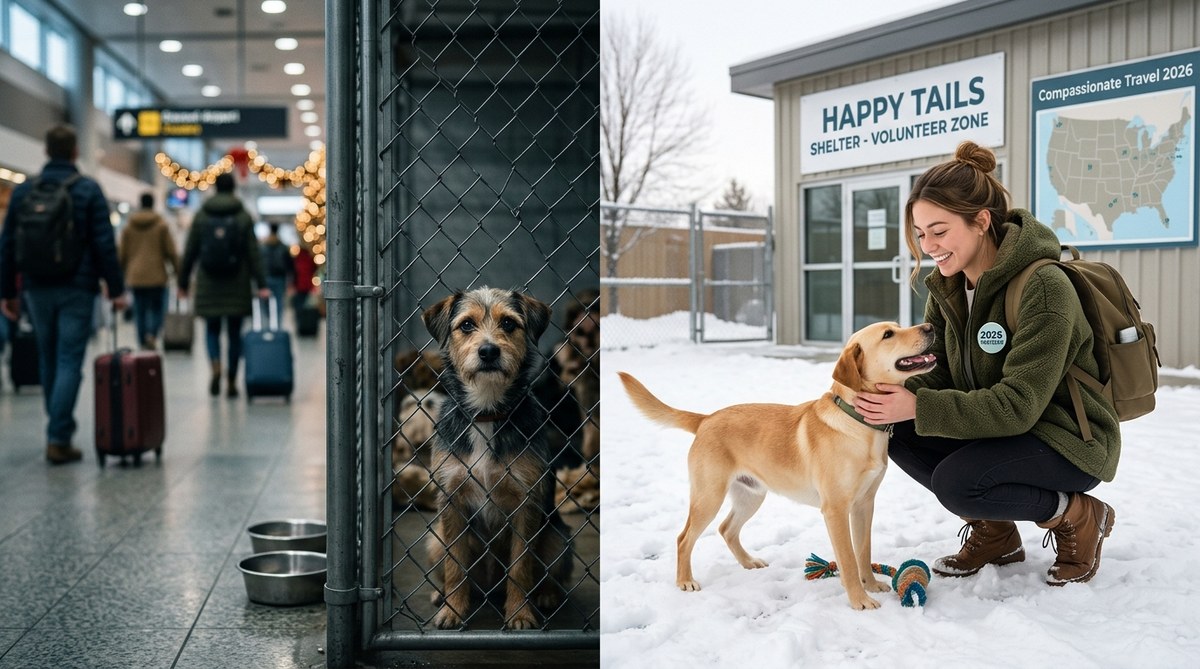
The week between Christmas and New Year’s is one of the busiest travel periods in the United States. Airports swell, highways clog, and millions of Americans pack their bags for family visits, ski trips, or warm weather escapes. But while you are booking flights and packing suitcases, something else happens behind the scenes. Local animal shelters see a surge in owner surrenders, a spike in lost pet reports, and a sudden drop in adoption applications. The holiday travel impact on shelter animals is real, and it is often hidden from the average traveler. The good news? You can plan a getaway in 2026 that protects the animals you care about.
Holiday travel creates measurable harm for shelter animals through owner surrenders, lost pets, and reduced staffing. By planning ahead with a pet care contingency plan, choosing animal friendly accommodations, and donating time or money before you leave, you can reduce that harm. Even small changes to your 2026 travel habits can save lives.
How the Holidays Create a Perfect Storm for Shelters
The holiday season already strains local animal shelters. Cold weather increases demand for warm shelter spaces. Families adopt pets as gifts, only to return them in January. But travel adds a specific layer of pressure that many people do not see.
When families leave town, some make the heartbreaking decision to surrender their pet because they cannot find affordable boarding or a trusted pet sitter. Others accidentally lose their pet during the chaos of packing, loading the car, or opening the door for guests. Shelters report that lost pet intakes jump by as much as 30 percent in the two weeks surrounding major holidays.
At the same time, shelter staffing drops. Volunteers are traveling too. Regular foster families are out of town. The people who normally walk dogs, clean kennels, and process adoptions are stretched thin. This combination of higher intake and lower capacity means animals wait longer for care, and some are euthanized simply because there is no space.
The Three Biggest Ways Travel Hurts Shelter Animals
Understanding the specific mechanisms helps you target your compassion. Here are the three main channels of harm.
-
Owner Surrenders Driven by Travel Logistics
A family plans a two week trip to visit relatives. They cannot find a kennel with availability. Their usual pet sitter is booked. Rather than cancel the trip or rehome responsibly through a rescue network, they drop the animal at the local shelter. Many of these surrenders are preventable with earlier planning. -
Lost Pets During Transit and House Guest Visits
A dog escapes through a door left open by a delivery driver while the family is packing. A cat slips out when relatives arrive and prop the door for luggage. These lost pets flood shelters right when resources are lowest. -
Reduced Adoption Rates During Travel Season
People delay adopting because they are traveling or expecting guests. Shelters see a slump in adoptions from mid December through mid January. Meanwhile, intake continues. The gap between animals coming in and animals going out widens dangerously.
What You Can Do Before You Leave
You do not have to stay home to be a hero. A little advance work turns your trip into a net positive for shelter animals.
- Book pet care early. Reserve a kennel, vet recommended boarding facility, or trusted pet sitter at least three weeks before your departure. This prevents last minute surrenders.
- Update your pet’s ID tags and microchip. If your pet does get lost while you are away, current contact information is the difference between a happy reunion and a shelter intake.
- Prepay a donation to your local shelter. Call your shelter and ask what they need most in late December. Often it is money for emergency medical care, unexpired canned food, or cleaning supplies.
- Foster a pet before the holiday crunch. Shelters need foster homes open during the holidays. If you are traveling, you cannot foster during your trip, but you can take an animal now and return them after you get back. This frees shelter space for the surge.
If you want to go further, consider learning how to advocate effectively for animal rights in your community so you can push for systemic changes that protect animals year round.
Choosing a Compassionate Destination
Not all travel destinations are equal when it comes to animal welfare. Some cities have strong shelter systems and low holiday surrender rates. Others struggle. You can vote with your wallet by choosing places that prioritize animal protection.
| Travel Choice | Impact on Shelter Animals | Better Alternative |
|---|---|---|
| Booking a hotel that allows pets | Reduces owner surrenders | Look for pet friendly hotels with no weight limits |
| Visiting a city with a high kill shelter | Supports a broken system | Visit cities with no kill communities or strong rescue networks |
| Eating at restaurants that source humanely | Indirectly supports animal welfare | Choose plant forward or certified humane restaurants |
| Ignoring local shelter needs | Missed opportunity | Spend two hours volunteering or donating at a local shelter in your destination city |
A Practical Checklist for Your 2026 Getaway
Use this numbered list as your travel planning guide. Print it, save it, or share it with a friend.
- Confirm your pet care arrangements three weeks before departure. If your sitter cancels, you have time to find a backup.
- Update your pet’s microchip registration and ID tags. Include a secondary contact who will be home during your trip.
- Make a donation to your local shelter. Even twenty dollars buys a bag of puppy food.
- Pack a pet emergency kit for your car. Include a leash, bowl, water, and the phone number of the nearest animal control along your route.
- Research animal shelters in your destination city. Add them to your map so you can stop by if you have downtime.
- Set a reminder to check on your pet sitter or boarding facility mid trip. A quick video call can catch problems early.
- Post a lost pet plan on your social media. If your pet escapes while you are away, your network can act before you even land.
For more ideas on staying engaged from home, check out these top 10 simple ways to support animal rescue efforts from home.
Common Mistakes Traveling Pet Owners Make
Even well meaning people slip up during the holiday rush. Here are the most frequent errors and how to avoid them.
- Assuming your pet sitter is available without a contract. Verbal agreements fall apart. Get a signed agreement and a backup sitter.
- Waiting until December to book boarding. Kennels fill up by Thanksgiving. Book early or arrange in home care.
- Forgetting to update emergency contacts. If your pet gets loose and the microchip points to an old phone number, the shelter cannot reach you.
- Leaving food and water bowls out for a “few days” alone. Never leave a pet unattended for more than 24 hours. Board them or hire a sitter.
- Adopting a pet as a holiday gift. Gifting animals leads to high return rates. Instead, gift a donation in the recipient’s name.
“The single most effective thing a holiday traveler can do for shelter animals is to plan their pet care at least one month in advance. Surrenders are almost always a crisis of timing, not a crisis of love.” — Dr. Mara Jensen, DVM and shelter medicine specialist
How to Support Shelters Even While You Are Away
You do not have to be physically present to make a difference. Remote support is powerful, especially during the holiday travel season.
- Set up a recurring donation. Even five dollars a month helps shelters budget for the holiday surge.
- Share shelter posts on social media. A shared adoption plea can reach someone who is not traveling and has space in their home.
- Buy from shelter wish lists. Many shelters have Amazon or Chewy wish lists. Ship items directly to the shelter while you are on the road.
- Offer to transport animals. If you are driving to your destination, some shelters need help moving animals to foster homes along your route. Call ahead and ask.
If you want to turn your travel habits into long term advocacy, read about empowering animal advocates practical steps to make a difference today.
The Ripple Effect of One Compassionate Trip
When you choose to plan your holiday travel with shelter animals in mind, you do more than protect one pet. You reduce the burden on an entire system. You free up a kennel for an animal who was not surrendered but was rescued from the street. You give shelter staff one less emergency to handle during their own stressful season. You model behavior for friends and family who see your choices and start making their own.
A single surrendered dog costs a shelter an average of 300 dollars in food, medical care, and staffing. A single lost cat takes up a cage for an average of 18 days before being reclaimed or adopted. By preventing just one surrender or one lost pet, you save the shelter hundreds of dollars and hours of labor. That is real impact.
Your 2026 Travel Pledge
Make a personal commitment this year. Before you book your flight or pack your bag, take three specific actions. Write them down. Tell a friend. Hold yourself accountable.
- Secure your own pet’s care with a signed contract and a backup plan.
- Donate money or supplies to a shelter before you leave.
- Research one animal welfare organization in your destination and plan a short visit or donation drop off.
If every socially conscious traveler did these three things, the holiday travel impact on shelter animals would shrink dramatically. Shelters would enter January with empty kennels instead of overflowing ones. Staff would have the resources to care for every animal that comes through the door.
You have the power to make that happen. Pack your suitcase, but pack your compassion too. Your 2026 getaway can be a gift to the animals who need it most.