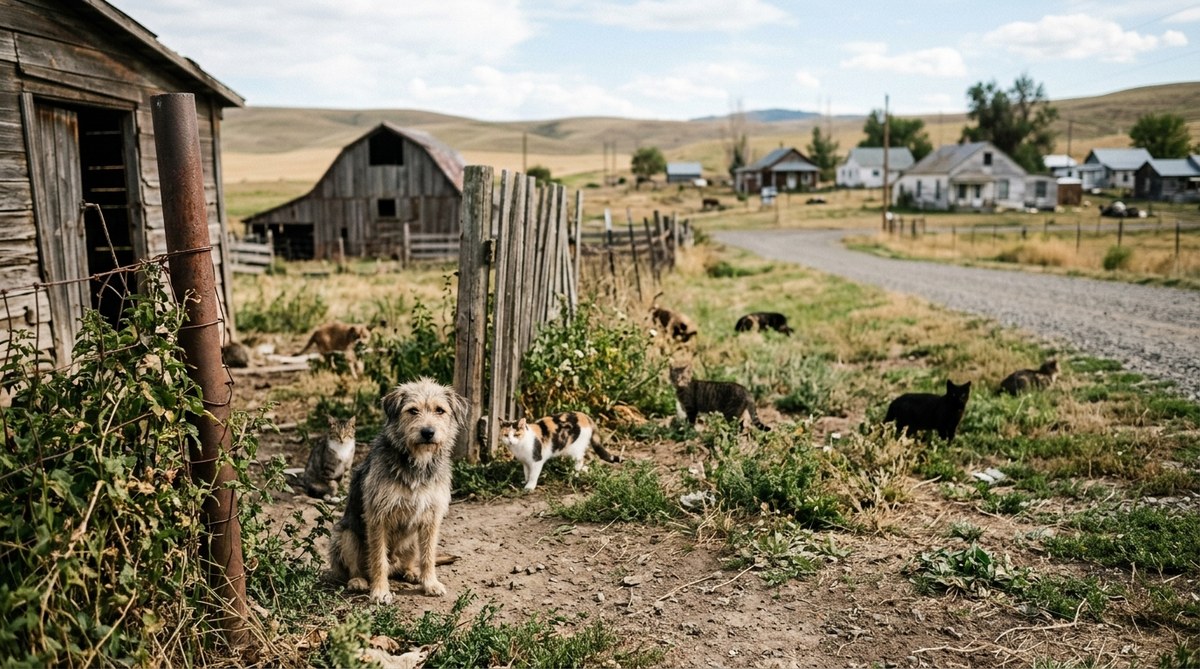
You drive down a long gravel road, past fields and farmhouses, and eventually you spot them: a dog trotting along the shoulder, ribs showing, or a cluster of kittens huddled under a collapsed barn. In rural America, stray animals are not a rare sight. They are part of the landscape. But behind that familiar image is a crisis that rarely makes the evening news. Shelters in these areas are overwhelmed, resources are scarce, and thousands of animals suffer in silence. The rural pet overpopulation crisis is real, and it demands our attention.
Rural pet overpopulation is driven by limited access to spay and neuter services, fewer shelters, and economic hardship. The consequences include high euthanasia rates, spread of disease, and suffering for animals. You can help by supporting transport programs, funding low-cost clinics, fostering, or donating directly to rural rescues. Every action, large or small, reduces the number of homeless pets in these forgotten communities.
Why Rural Communities Face a Unique Challenge
The rural pet overpopulation crisis is not just a smaller version of the urban stray problem. It is a distinct issue with different roots. In cities, animal control services, low-cost vaccination clinics, and multiple shelters are common. In rural counties, the nearest vet might be an hour away. A spay and neuter clinic might be a two-hour drive, if it exists at all.
Economic factors play a huge role. Many rural families live paycheck to paycheck. When a pet has an unplanned litter, the cost of surgery for each animal can be more than a weeks wages. People often cannot afford to spay or neuter their pets, even when they want to. The result is a cycle of litters that grow into strays, which then reproduce themselves.
Another factor is distance. Rural shelters are few and far between. They often operate on shoestring budgets with volunteer staff. When a shelter is full, and it usually is, there is no other option. Animals are turned away or, in many cases, euthanized because there is simply no space.
The Human Cost of an Overlooked Problem
This crisis does not just hurt animals. It affects people too. Stray dogs can form packs that threaten livestock or even children. Unvaccinated strays increase the risk of rabies and other zoonotic diseases. For farmers, a stray dog chasing cattle can cause injury and financial loss. For families, finding a litter of puppies on the road can be heartbreaking. They want to help but lack the means.
There is also an emotional toll on the people who work in rural shelters. Volunteers often face burnout. They see the same problems day after day: animals brought in with mange, starvation, or injuries from fights. They have to make impossible decisions about which animals to save. It is a quiet, grinding tragedy that rarely gets national attention.
What Makes the Problem Worse: A Look at Key Factors
To understand the scope of the rural pet overpopulation crisis, it helps to look at the main drivers side by side.
| Factor | Urban Areas | Rural Areas |
|---|---|---|
| Access to spay/neuter | Multiple low-cost clinics within city limits | Few or no clinics; long travel distances |
| Shelter density | Shelters within 5 to 10 miles | One shelter per several counties |
| Funding | Municipal budgets, large donor bases | Reliance on small local donations, grants |
| Public awareness | High media coverage, advocacy groups | Low visibility, limited outreach |
| Animal control | Dedicated officers, ordinances | Often absent or part-time only |
This table shows the gap clearly. Without access to basic preventative care, the number of stray animals continues to climb. The solution must address these disparities.
A Practical Plan: 5 Steps You Can Take Right Now
You do not need to live in a rural area to make a difference. Here is a numbered list of actions that directly address the rural pet overpopulation crisis.
-
Donate to transport programs. Many rural rescues lack the funds to move animals to areas with higher adoption rates. Your donation can pay for gas, crates, and vet checks for a transport run to a city shelter where the animal will find a home.
-
Sponsor a spay or neuter. Look for rural rescues that partner with low-cost clinics. A $50 donation can cover the surgery for one cat or dog. A $200 donation can cover a whole litter. This stops the cycle at its source.
-
Volunteer your skills from home. Rural shelters often need help with grant writing, social media management, or accounting. You can offer your expertise remotely. This is a powerful way to support a shelter without traveling.
-
Organize a supply drive. Collect old towels, blankets, leashes, food bowls, and unopened bags of pet food. Many rural shelters run on donated supplies. Coordinate with a local church or community center to act as a drop-off point.
-
Foster or adopt from a rural shelter. When you adopt from a rural rescue, you free up space for another animal in need. If you cannot adopt long-term, consider fostering. Even a two-week foster can save an animal from euthanasia.
“The single most effective thing a person can do is fund spay and neuter for rural communities. It is not glamorous, but it works. Every dollar spent on prevention saves ten dollars spent on sheltering later.” Dr. Sarah Millbrook, veterinarian and rural animal welfare advocate.
How to Identify a Rural Rescue That Needs Help
Not all rescues are created equal. Some are well-funded. Others are truly struggling. Here are signs that a rural rescue could use your support:
- Their website or social media has not been updated in months. They are too busy saving animals to post.
- They post urgent pleas for foster homes or emergency medical funds.
- They operate out of a private home or a small converted barn.
- They have a high number of owner-surrendered pets due to local economic hardship.
- They mention long waiting lists for spay and neuter appointments.
If you see these signs, reach out. Even a small monthly donation can stabilize their budget.
Common Misconceptions About Rural Stray Animals
Some people believe that stray animals in the countryside are “free” or “better off” because they have space to roam. This is not true.
- Myth: Stray dogs in rural areas can hunt and survive on their own. In reality, most strays are underfed, injured, or sick. They compete for scraps and often starve in winter.
- Myth: Rural shelters are not as crowded as city shelters. The opposite is true. Rural shelters often have higher intake rates relative to their capacity because there are fewer resources.
- Myth: People in rural areas do not care about their pets. Most rural pet owners love their animals. They simply lack access to affordable veterinary care. The problem is structural, not a lack of compassion.
Understanding these myths helps us approach the crisis with empathy rather than judgment.
Ways to Raise Awareness Without Leaving Home
You can be an advocate for the rural pet overpopulation crisis from anywhere. Here are a few ideas:
- Share articles from rural rescue organizations on your social media. Use local hashtags to reach people in your state.
- Talk to your veterinarian about whether they know of a rural clinic that needs supplies or funding.
- Write a letter to your state representative asking for increased funding for rural spay and neuter programs. This is a form of advocacy that can lead to real change. For more guidance, check out this resource on how to lobby your local government for stronger animal protection laws in 2026.
- Host a virtual fundraiser. A simple Facebook birthday fundraiser can raise hundreds of dollars for a rural shelter.
Small actions add up. When many people do a little, the impact is huge.
Building a Bridge Between Urban Donors and Rural Needs
One of the biggest challenges is connecting people who want to help with the rescues that need it most. Urban areas have a surplus of resources: donors, volunteers, and adoption events. Rural areas have a surplus of animals and a shortage of everything else.
Transport programs are one solution. They move adoptable animals from rural shelters to urban adoption centers. This reduces the burden on rural shelters and gives animals a better chance. You can support these programs by donating directly or by volunteering to drive a leg of the transport route.
Another powerful idea is to partner a suburban rescue group with a rural one. The suburban group can provide funding, supplies, and foster networks. The rural group provides the animals and local knowledge. It is a partnership that saves lives on both sides.
If you are interested in starting a neighborhood effort, read our guide on how to start a neighborhood pet food drive for shelters in need. It includes practical steps that work in any community.
A Future With Fewer Homeless Pets
The rural pet overpopulation crisis will not solve itself. But it is solvable. With consistent effort, better funding, and wider awareness, we can reduce the number of stray animals in rural America. Every spay surgery, every transport run, every donated bag of food brings us closer to that goal.
You have the power to be part of the solution. Whether you donate, volunteer, or simply share what you have learned today, you are making a difference. The animals in those quiet, overlooked corners of the country are counting on us. Let us not look away.
For more ways to get involved, read about 10 ways you can support local animal shelters in 2026. And if you are ready to take the next step, consider learning how to organize a successful spay and neuter clinic in your community. Together, we can turn the tide on this hidden crisis.