Your closet holds more power than you might think. That bag of clothes you have been meaning to drop off could become a steady stream of funding for a local animal rescue. A clothing drive for animal rescue is one of the most accessible ways to raise money without asking for cash donations. People love to declutter for a cause, and shelters desperately need funds for medical care, food, and facility upkeep.
A clothing drive for animal rescue works best when you partner with a textile recycler that pays by the pound, promote the event with clear instructions on what items are accepted, and set a specific fundraising goal tied to a shelter need. This guide walks you through the entire process so your effort directly funds rescue operations.
Why a Clothing Drive Makes Sense for Animal Rescue
Animal shelters operate on tight budgets. Many rely on donations to cover veterinary bills, spay and neuter programs, and daily care. A clothing drive for animal rescue turns unwanted textiles into cash. It is a low barrier way for neighbors, coworkers, and friends to contribute without opening their wallets. Plus, it keeps clothing out of landfills.
Textile recycling companies and thrift store partners often pay organizations per pound of donated goods. Some even offer a flat rate per bag. The money goes straight to the rescue. This model works especially well for shelters that cannot host large cash based fundraisers.
How to Set Up Your Clothing Drive for Animal Rescue
Follow these steps to create a drive that runs smoothly and raises real money for the animals.
-
Choose a partner organization. Find a textile recycler, a thrift store chain, or a charity that accepts bulk clothing donations and pays a rate per pound. Research their terms. Some require a minimum weight. Others offer pickup services for large hauls.
-
Set a clear fundraising goal. Tell your community exactly where the money will go. For example, “We want to raise 500 dollars to cover heartworm treatment for five dogs.” A specific goal motivates people to participate.
-
Pick a collection period. Two weeks is a good window. It gives people time to sort through their closets without dragging on too long. Promote the start and end dates clearly.
-
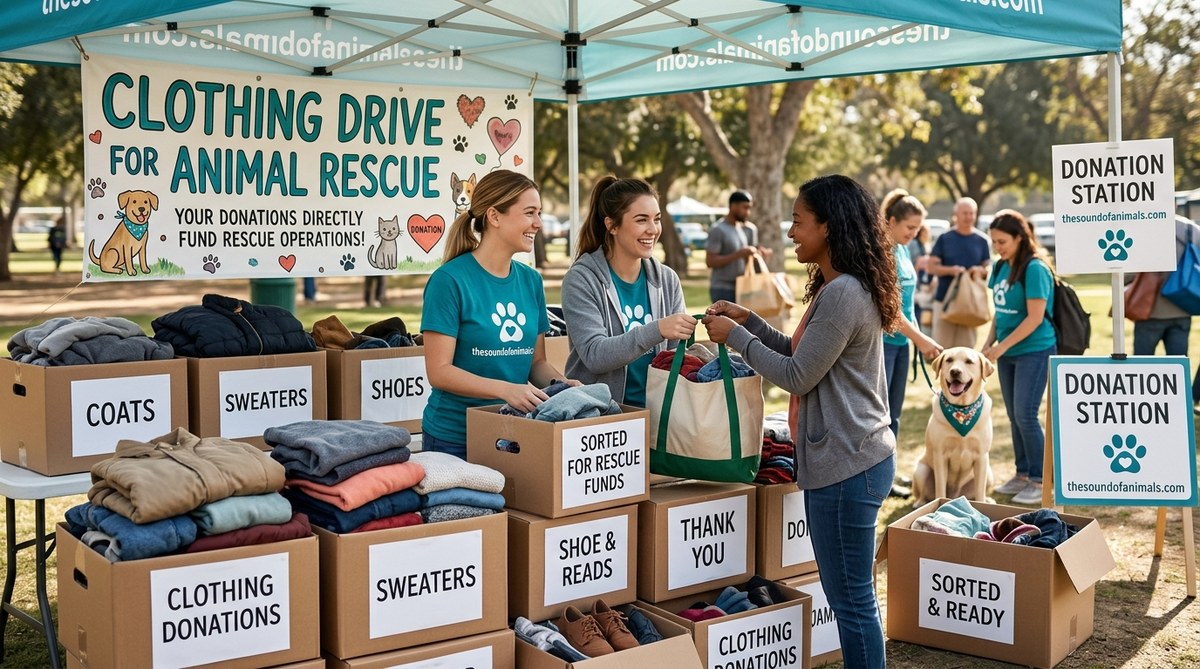
Choose drop off locations. Your home, a local pet supply store, a coffee shop, or the shelter itself can serve as a collection point. Make sure the location is safe and accessible. If you use multiple spots, label bins clearly.
-
Spread the word. Use social media, neighborhood groups, email lists, and flyers at veterinary clinics. Explain what you are collecting and why. Share your progress during the drive to keep momentum going.
-
Sort and deliver. After the drive ends, sort out any items that do not meet the partner’s requirements. Then deliver the goods and collect the payment. Send a thank you note to everyone who donated.
What to Collect and What to Skip
Not all textiles are created equal. Some items sell well at thrift stores or recycle easily. Others cause problems. Use this table to guide your donors.
| Accepted Items | Items to Avoid |
|---|---|
| Gently used clothing (all seasons) | Soiled or stained clothing |
| Shoes (pairs tied together) | Single shoes or damaged footwear |
| Belts, handbags, and backpacks | Broken electronics or toys |
| Clean linens and towels | Wet or moldy textiles |
| Hats, scarves, and gloves | Items with pet hair or flea residue |
| Curtains and fabric scraps | Carpet remnants or padding |
Make sure to tell donors to check pockets. A forgotten tissue or pen can ruin a whole bag.
Common Mistakes That Reduce Your Impact
Avoid these pitfalls to keep your clothing drive for animal rescue effective and ethical.
- Not confirming the partner’s payment method. Some recyclers pay per bag. Others pay per pound. A few require a minimum donation weight. Call ahead and get the details in writing.
- Setting an unrealistic goal. If your community is small, do not aim for 2,000 dollars. Start with a modest target and celebrate when you exceed it.
- Forgetting to communicate the timeline. People will drop off clothes weeks after the drive ends if you do not announce the cutoff clearly.
- Mixing trash with treasures. Donors sometimes use clothing drives as a way to dispose of broken items. Screen donations or put up a sign listing what you cannot accept.
- Ignoring the ethical side. Some textile recyclers export clothing to countries where it harms local economies. Research your partner. Look for ones that prioritize domestic reuse or responsible recycling.
“A clothing drive is a bridge between people who want to help and shelters that need resources. The key is transparency. Tell people exactly how their old jeans will become funds for a rescue dog’s surgery. That connection keeps them coming back.” – Sarah Mitchell, volunteer coordinator at Paws Forward Rescue
How to Promote Your Drive Without Sounding Pushy
People respond to stories. Instead of just saying “Donate clothes,” share a photo of a shelter animal and explain how the funds will help. For example, post a picture of a cat named Willow and write, “Willow needs dental surgery. Your old coats can pay for it.”
Use these channels to reach your audience:
- Nextdoor and Facebook neighborhood groups
- Local pet store bulletin boards
- School and workplace newsletters
- Instagram and TikTok with a countdown
- Local news community calendars
If you run a small business, offer a small discount to customers who bring in a donation bag. This creates a win win for everyone.
A Simple Timeline for Your First Drive
Planning ahead makes everything easier. Here is a sample schedule.
- Four weeks before: Choose your partner and set your goal. Confirm the payment terms.
- Three weeks before: Announce the drive. Start collecting names of volunteers who can help sort.
- Two weeks before: Place collection bins at your drop off locations. Post signs with accepted items.
- Drive week: Promote daily on social media. Share photos of the bins filling up.
- After the drive: Deliver the goods. Send a thank you message. Announce the total raised and show how it will be used.
How to Keep the Momentum Going Year After Year
A one time clothing drive for animal rescue is great. A recurring one builds a loyal donor base. After your first drive, send a follow up email or post that includes a photo of the animals you helped. Ask people to save their spring and fall closet cleanouts for your next event.
Consider partnering with local schools. Many have service learning requirements. A clothing drive gives students a concrete way to earn hours while supporting animal welfare. You can read more about how to get started as a volunteer for local animal shelters if you want to expand your involvement.
If you want to take your advocacy further, look into 10 creative ways to raise awareness for animal welfare in your community. Clothing drives are just the beginning.
The Right Way to Handle the Money
Once you collect the payment from your textile partner, put it into a dedicated fund. Do not mix it with personal money. If you are collecting on behalf of a specific rescue, hand over the full amount and ask for a receipt. Some shelters can provide a tax receipt for the donor, which encourages future participation.
If you are running the drive as an independent fundraiser, be transparent about how much you raised and where the money went. Post a simple breakdown on social media. Trust is everything in community fundraising.
What Makes This Different from a Cash Donation Drive
Cash drives are essential, but they ask people to give money they may not have. A clothing drive for animal rescue asks for something people already own. That lowers the barrier. Someone who cannot afford a 20 dollar donation can still contribute a bag of old jeans. That bag might earn the shelter 5 dollars. It adds up.
Clothing drives also create a tangible sense of participation. Donors see their items being collected and weighed. They feel part of the effort. That emotional connection often leads to deeper involvement later, such as fostering or adopting.
Your Turn to Make a Difference
You do not need a big budget or a huge team. You need a plan, a partner, and a willingness to ask. A clothing drive for animal rescue is a simple, effective way to channel your community’s generosity into real help for animals in need.
Start small. Pick one shelter. Set a goal. Tell your neighbors. Watch the bins fill up. Then watch the rescue put that money to work saving lives. If you want to see what else is possible, check out heartwarming rescue stories that highlight the impact of animal advocacy for inspiration.
The clothes you no longer wear can become the medicine, food, and warmth that a shelter animal desperately needs. That is a powerful trade. Go make it happen.