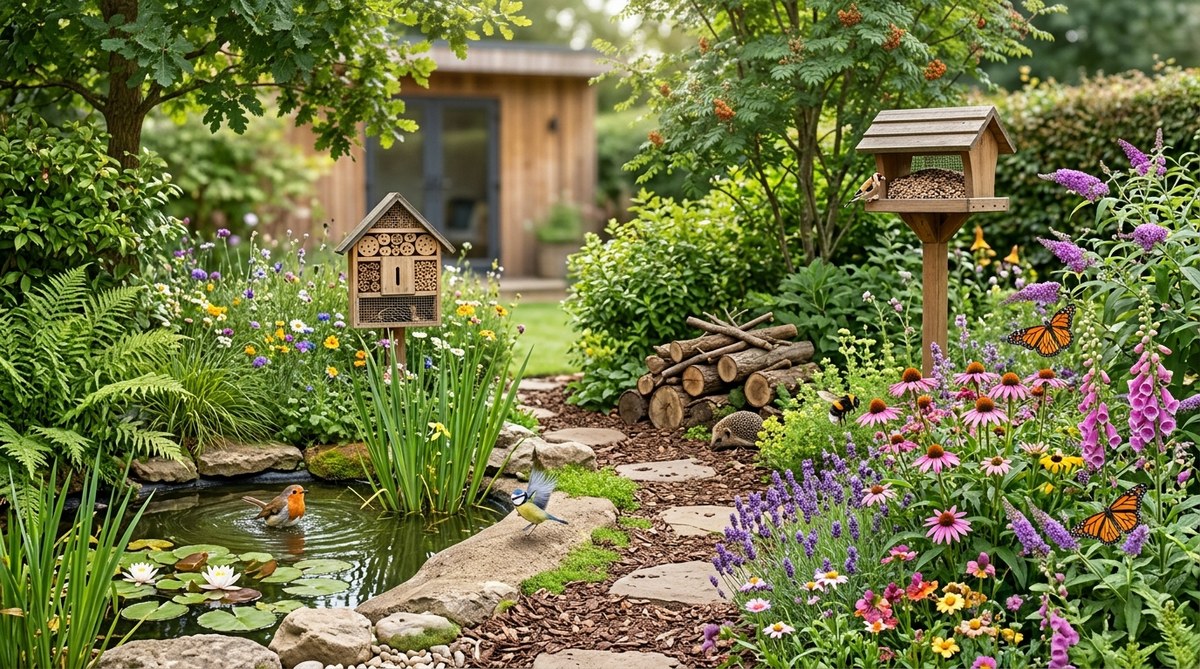
Your garden can be more than just a pretty patch of grass. It can become a lifeline for local birds, butterflies, bees, and small mammals. As natural habitats shrink across the United States, backyards like yours are becoming crucial stopovers for wildlife on the move. The good news? You don’t need acres of land or a degree in ecology to make a difference. You just need a plan and a little patience.
Turning your garden into a wildlife sanctuary is about making small, intentional changes. Focus on native plants, reliable water sources, and natural shelter. Avoid pesticides and leave some areas wild. Every native flower you plant or birdbath you fill creates a safe corridor for animals. Start with one corner of your yard and expand as you learn what works for your local ecosystem.
Start With Native Plants
The single most effective step you can take is to replace exotic ornamentals with plants native to your region. Native plants have co-evolved with local insects, birds, and mammals. A native oak can support hundreds of caterpillar species. A non-native ornamental might support fewer than ten. That difference matters when birds are looking for protein-rich insects to feed their chicks.
Here are some of the best native plants for a wildlife sanctuary:
- Milkweed (essential for monarch butterflies)
- Purple coneflower (seeds for finches, nectar for bees)
- Goldenrod (late-season pollen source)
- Oak trees (host plant for thousands of insect species)
- Blueberry bushes (fruit for birds and mammals)
- Switchgrass (shelter for ground-nesting birds)
Native plants also require less water and fertilizer once established. They handle local weather patterns better than imported species. Visit a native plant nursery in your area or check with your local extension office to find species that thrive in your specific hardiness zone.
Provide a Reliable Water Source
Wild animals need clean water every day. A simple birdbath works, but it needs regular maintenance. Stagnant water breeds mosquitoes and spreads disease. Change the water every two to three days. Scrub the basin with a brush to remove algae.
For a more natural approach, consider a small ground-level pond. Line a shallow depression with pond liner, add a few rocks for perching, and surround it with native sedges. Even a plastic saucer sunk into the ground and filled with pebbles can serve as a safe drinking spot for bees and butterflies. Place a few sticks in the water so small mammals can climb out if they fall in.
In colder climates, a heated birdbath or a floating de-icer can keep water available through winter. This can be a lifesaver when natural sources freeze over.
Build Layers of Shelter
Wildlife needs places to hide, nest, and sleep. A manicured lawn offers none of that. You need layers of vegetation.
- Plant a mix of tall trees, understory shrubs, and ground cover. This vertical structure mimics a natural forest edge.
- Leave a brush pile in a quiet corner. Stack fallen branches, leaves, and twigs. This creates a haven for toads, lizards, and small mammals.
- Install a bat box or birdhouse on a pole or tree. Face it away from prevailing winds and direct afternoon sun.
- Let some leaf litter stay on the ground through fall and winter. Many insects and amphibians rely on it for winter cover.
- Plant evergreen shrubs near your fence line. They provide year-round shelter from predators and weather.
Avoid trimming every dead branch from your trees. Standing dead wood, called snags, provides nesting cavities for woodpeckers, owls, and bluebirds. If a snag is a safety risk, cut it down to a tall stump and leave it in place.
Rethink Your Lawn Care
The American lawn is a desert for wildlife. It offers no food, no shelter, and often requires chemical inputs that harm animals. You don’t have to tear it all out, but you can shrink it.
Reduce the size of your turf grass by expanding garden beds. Replace part of your lawn with a patch of native meadow. Mow less frequently and at a higher setting. Clover and dandelions are excellent early-season food sources for bees. Let them bloom before you mow.
Stop using synthetic fertilizers, herbicides, and pesticides. These chemicals poison insects at the base of the food chain. When birds eat poisoned insects, they get sick too. If you must control pests, use targeted methods like insecticidal soap or neem oil. Better yet, encourage natural predators like ladybugs, lacewings, and birds to do the work for you.
Create Safe Corridors
Animals need to move between food sources, water, and shelter. A fenced yard can block that movement. Cut a small gap at the bottom of your fence so hedgehogs, rabbits, and turtles can pass through. Even a four-inch gap is enough for many small animals.
If you have a solid wood fence, consider replacing sections with a chain-link fence or planting a hedge. Hedges made of native shrubs provide food, shelter, and passage all in one. They also absorb noise and filter air pollution.
Connect your garden to neighboring green spaces. Talk to your neighbors about creating a wildlife-friendly block. When several yards link together, the habitat becomes much more valuable than any single garden.
Avoid Common Mistakes
Even well-intentioned gardeners can make errors that harm wildlife. Here is a table to help you avoid the most common pitfalls.
| Good Practice | Common Mistake | Why It Matters |
|---|---|---|
| Plant native species | Plant invasive ornamentals | Invasives crowd out native plants that insects need |
| Provide clean water | Use deep, slick-sided birdbaths | Birds and small mammals can drown without a perch |
| Leave leaf litter | Rake and bag every leaf | Leaf litter shelters insects and fertilizes soil naturally |
| Use natural pest control | Spray broad-spectrum pesticides | Pesticides kill beneficial insects and poison birds |
| Create brush piles | Remove all fallen branches | Brush piles offer critical cover from predators |
| Let snags stand | Cut down all dead trees | Snags provide nesting cavities for dozens of species |
A Simple Action Plan for 2026
You can start small. Here is a numbered plan to guide your first season.
- Identify one area of your yard that gets at least six hours of sun. Remove the grass and plant three native wildflowers and one native shrub.
- Set up a shallow water source. A terracotta saucer works perfectly. Place it near cover so birds feel safe approaching.
- Stop using all chemical pesticides and herbicides for the growing season. Observe what insects appear. You will likely see more beneficial bugs than pests.
- Build a small brush pile in an out-of-the-way corner. Use pruned branches and fallen leaves.
- Install one birdhouse or bat box. Research the right dimensions for species in your area.
- Join a local native plant society or wildlife habitat program. Many offer free seeds and expert advice.
“The most important thing you can do for wildlife is to stop treating your garden like a sterile room. Let a little messiness in. That messiness is life.” — Dr. Sarah Hollis, wildlife biologist and author
How to Certify Your Wildlife Habitat
Once your garden is established, consider getting it certified. The National Wildlife Federation offers a Certified Wildlife Habitat program. Your garden must provide food, water, cover, and places to raise young. You also need to practice sustainable gardening methods like soil conservation and eliminating chemicals.
The process is simple. Fill out an online application, pay a small fee, and you will receive a sign to display in your yard. Certification connects you to a nationwide network of habitat stewards. It also sets a visible example for your neighbors.
If you want to take your advocacy further, learn more about how to advocate effectively for animal rights in your community. You can also find top ways to support animal rescue missions in your community to extend your impact beyond your fence line.
Your Garden as Part of a Bigger Picture
Every native flower you plant is a landing pad for a bee. Every brush pile is a home for a toad. Every drop of clean water is a drink for a migrating bird. Your garden does not exist in isolation. It is a stepping stone in a larger network of wild spaces.
When you learn how to make your garden a wildlife sanctuary, you join a growing movement of people who refuse to let nature disappear from their neighborhoods. You become part of the solution. Start with one plant. Add one water source. Watch what shows up. The birds, the butterflies, and the quiet hum of a healthy ecosystem will be your reward.
For more ways to help, check out our guide on 10 ways you can support local animal shelters in 2026. And if you are ready to go further, explore how to start a wildlife rescue network in your neighborhood.
The Quiet Joy of a Living Garden
A wildlife sanctuary is never finished. It changes with the seasons. New plants emerge. New animals arrive. Some years you might see a fox passing through. Other years you might host a family of chickadees. The joy is in the watching.
Give yourself permission to let your garden be a little wild. Resist the urge to tidy every corner. Celebrate the caterpillar holes in your leaves. They mean you are feeding the next generation of butterflies. That is the truest measure of a successful wildlife garden.
Start today. Pick one change from this list and make it happen this weekend. Your local wildlife is waiting.