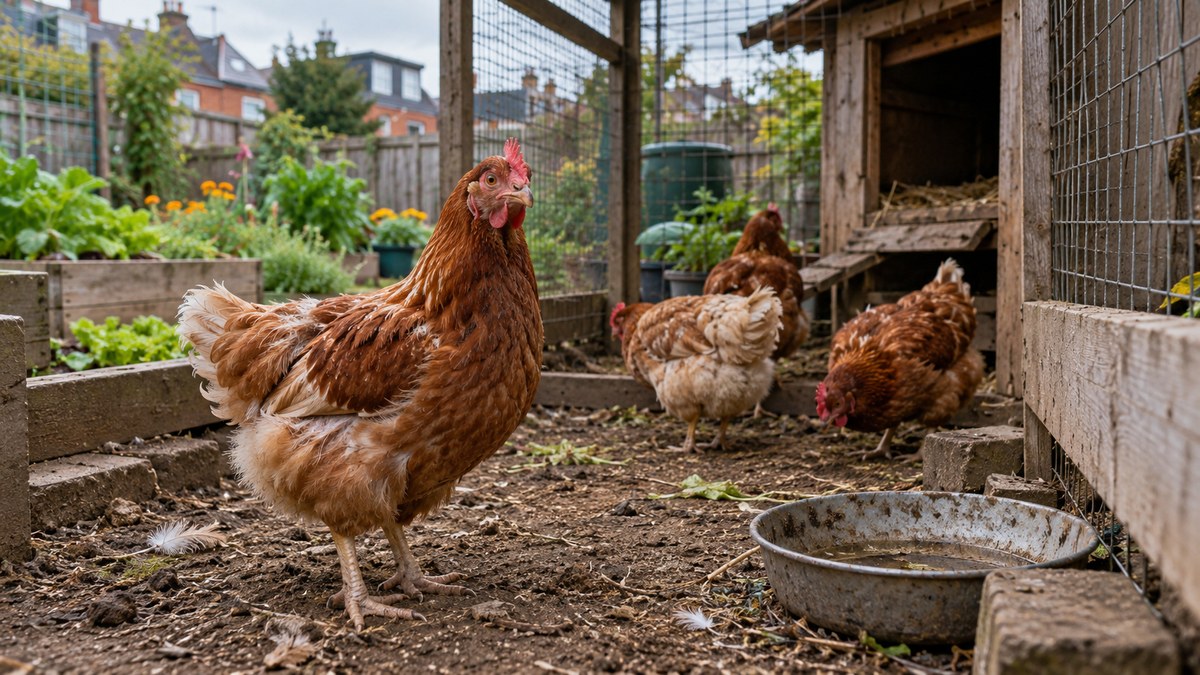
The egg carton promises a storybook life. A few hens in the backyard, fresh eggs every morning, and the gentle clucking of happy animals. For many new urban farmers, the reality lands much harder. The rooster next door crows at 4:30 AM. The smell from the coop drifts into the kitchen. A beloved hen dies suddenly with no clear cause. And the neighbor who smiled when you built the coop now leaves notes on your car.
Urban chicken keeping problems are rarely discussed in the glossy blog posts and Instagram reels. But they are real. They are common. And they can turn a dream into a source of stress for both you and your birds.
Backyard chickens suffer silently when owners are unprepared for the realities of urban flocks. Noise complaints, odor issues, predator attacks, and unexpected mortality are not failures of character. They are predictable problems that can be solved with better planning, honest self assessment, and a willingness to put the animals’ welfare first before the Instagram aesthetic.
The Noise Problem That Wakes the Neighborhood
The most common complaint from new owners is the noise. People expect soft clucking. They do not expect the egg song.
When a hen lays an egg, she announces it. Loudly. For several minutes. If you have three hens, you get three rounds of this performance each day. The sound carries across fences and through windows. In a suburban neighborhood with houses on quarter acre lots, that sound travels straight into your neighbor’s home office.
Roosters are a different level entirely. Many urban areas ban roosters for good reason. But even without a rooster, a flock of hens can produce enough noise to trigger complaints. The problem gets worse when the birds are bored, stressed, or poorly housed.
What works for noise control
- Choose quieter breeds. Orpingtons, Wyandottes, and Brahmas are known for calmer temperaments and softer voices.
- Keep the flock small. Three to four hens produce less cumulative noise than six or seven.
- Position the coop away from property lines. Place it near your house or behind a garage to buffer the sound.
- Provide enrichment. Bored hens squabble and scream. Hanging a cabbage head or scattering scratch grains keeps them busy and quiet.
The Smell That Changes Everything
You read about fresh pine shavings and the natural fertilizer value of chicken manure. Nobody warns you about the wet ammonia smell that develops inside a coop after three days of rain.
Chicken manure is high in nitrogen. When it mixes with moisture and bedding, it releases ammonia fumes. Those fumes burn the birds’ respiratory systems. They also drift into your yard and your neighbor’s yard. In hot summer months, the problem multiplies.
Why the smell gets out of control
| Mistake | Result | Fix |
|---|---|---|
| Using deep litter method without managing it | Ammonia buildup and respiratory illness | Remove wet patches daily |
| Not enough ventilation in the coop | Condensation and mold | Add vents near the roof line |
| Storing manure near property lines | Neighbor complaints | Compost manure away from fences |
| Using straw instead of pine shavings | Faster decomposition and stronger smell | Switch to kiln dried pine shavings |
| Skipping weekly cleanouts | Fly infestations and odor | Set a calendar reminder for full cleanouts |
Mortality That Hits Without Warning
New owners often assume chickens are hardy animals. The reality is different. Backyard chickens face threats from predators, disease, and their own biology.
One of the hardest urban chicken keeping problems is sudden death. A hen can appear healthy in the morning and be dead by evening. Causes include egg binding, heart attacks from stress, crop impaction, and undetected parasites.
Common causes of unexpected death
- Predator attacks that happen during the day. Hawks, raccoons, and neighborhood dogs can all kill a hen in seconds.
- Egg binding. Young hens or hens with poor nutrition can get an egg stuck inside them.
- Marek’s disease. This virus is common in backyard flocks and can cause paralysis and death.
- Heat stroke. Chickens do not sweat. Summer temperatures above 90 degrees can kill them without shade and water.
“The number one cause of death in backyard flocks is not disease. It is improper housing that fails to protect against predators and weather extremes.” — Dr. Lila Torres, avian veterinarian and author of Urban Flock Health
Neighbor Complaints That Escalate
You might have the quietest, cleanest coop in the county. But if one neighbor decides to complain, you could face a visit from animal control or a zoning board hearing.
Neighbor complaints about urban chicken keeping problems often start with small issues. A hen escapes and digs up a flower bed. The smell drifts during a backyard barbecue. A rooster crows during a Zoom call. These small events pile up.
How to prevent complaints before they start
- Talk to your neighbors before you build the coop. Show them your plans. Offer them free eggs.
- Keep a clean property. Remove manure weekly. Store feed in metal cans to prevent rodents.
- Control dust. Chicken dust contains dander and feather particles that can trigger allergies.
- Never let birds free range unsupervised. Loose chickens in a neighbor’s yard is a guaranteed complaint.
- Have an exit plan. If the flock becomes a problem for the neighborhood, know how you will rehome the birds.
The Hidden Cost of Care
Many new owners underestimate the ongoing expenses. Feed costs have risen sharply since 2020. In 2026, a 50 pound bag of layer feed costs between $25 and $35 depending on your region. Bedding, supplements, vet care, and coop maintenance add up.
Annual cost breakdown for a small urban flock
- Feed: $200 to $350 per year for four hens
- Bedding: $80 to $150 per year
- Vet visits: $100 to $300 per year (if you can find an avian vet)
- Coop maintenance: $50 to $200 per year
- Supplements and treats: $50 to $100 per year
When you add the initial setup cost of a coop, run, feeder, waterer, and heat source, the first year can easily exceed $1,500. That is a lot of eggs. A dozen eggs from the store costs around $4 to $6 in 2026. You would need to produce over 250 dozen eggs just to break even.
Disease Risks and Biosecurity
Chickens carry diseases that can affect humans. Salmonella is the most well known. Campylobacter and avian influenza are also risks. Children, elderly people, and immunocompromised individuals are most vulnerable.
Urban flocks are at risk of catching diseases from wild birds. Waterfowl carry avian influenza. Songbirds can introduce mites and lice. Rodents spread leptospirosis and salmonella.
Biosecurity steps every owner should follow
- Wear dedicated shoes when entering the coop. Do not wear those shoes inside your home.
- Wash hands after handling birds or eggs.
- Quarantine new birds for 30 days before introducing them to the flock.
- Keep wild bird feeders away from the chicken run.
- Clean waterers and feeders weekly with a diluted bleach solution.
When It Is Time to Stop
Some urban chicken keeping problems cannot be solved. If you have tried everything and the flock is suffering, or the neighbors are taking legal action, or you cannot afford proper care, it is okay to stop.
Rehoming chickens is not a failure. It is a responsible decision. Many animal rescues and sanctuaries accept backyard chickens. You can find homes through local farm groups or online networks. If you are interested in supporting these efforts, you might want to read about how to get started as a volunteer for local animal shelters.
Making Better Choices for the Birds
The most honest advice for anyone considering backyard chickens is this: do not get them unless you are prepared for the full reality. Chickens are not starter pets. They are living creatures with complex needs. They deserve a home that prioritizes their welfare over the owner’s convenience.
If you already have a flock and are struggling, you are not alone. The problems you face are common. They are solvable. But they require honest effort and sometimes hard decisions.
For those who want to help animals but are not ready for the commitment of a flock, there are other ways to make a difference. You can explore top 10 simple ways to support animal rescue efforts from home or learn about how to advocate effectively for animal rights in your community.
Turning Struggle Into Advocacy
The urban chicken keeping problems you face today can become the foundation for better practices tomorrow. Share what you have learned with other new owners. Support local ordinances that require proper housing standards for backyard flocks. Advocate for stronger enforcement of animal cruelty laws.
When you understand the silent suffering that happens in backyard coops, you cannot unsee it. Use that knowledge. If you are looking for more ways to take action, consider reading empowering animal advocates: practical steps to make a difference today.
Your flock depends on you. But you do not have to carry that responsibility alone. There are resources, communities, and professionals ready to help. The first step is admitting that the problems are real. The second step is taking action to fix them. Your birds deserve nothing less.